How to Spot a Fake Chanel Bag in 2026?

Last Updated on:
Chanel bags are some of the most counterfeited luxury items in the world. With resale prices soaring above $10,000 for models like the Classic Flap, counterfeiters have upped their game – using advanced techniques to mimic materials, hardware, and stitching.
Buying a fake doesn’t just cost you money – it means settling for low-quality leather, off-brand hardware, and flawed design. This 2026 authentication guide uses real-world examples and decades of Chanel expertise to help you detect the difference.
Authenticate your Chanel now
Inspect the Overall Appearance and Shape
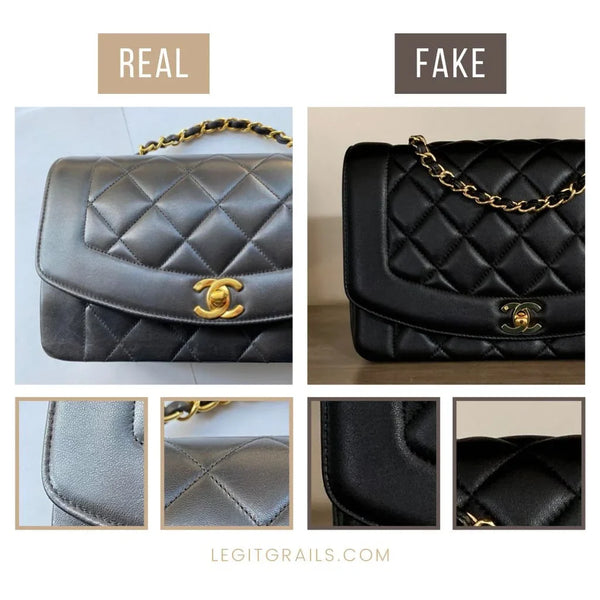
Start by checking the bag’s proportions. Authentic Chanel bags hold their shape. They’re symmetrical, with clean lines, defined structure, and no sagging even after years of use.
Fakes often appear misshapen or overly stiff. If the bag feels too soft, puffy, or unusually structured, that’s a red flag.
Examine the Leather

Chanel bags are made using premium leather types:
- Lambskin: Soft, smooth, with a slight sheen. Should feel buttery to the touch and show a natural softness, not shine like plastic.
- Caviar leather: Durable calfskin with a pebbled texture. Each “grain” is raised and defined – not flat or rubbery.
-
Patent leather: Has a glossy surface, but retains firmness and clarity – not foggy or overly reflective like some fakes.
Inauthentic bags may use synthetic leather, which feels plasticky, overly smooth, or rigid.
Analyze the Quilting Pattern

Chanel’s diamond quilting is iconic – and precise.
- Authentic Chanel: Diamonds are consistent in shape and size across the bag, including where panels meet. Seams should not break the diamond alignment.
-
Fake Chanel: Misaligned quilting across pockets or seams is common. Diamonds may be distorted or lose their puffiness over time.
Count the Stitching and Check Stitch Quality
- Authentic Chanel bags: Feature 10–11 stitches per inch (SPI). This tight stitching gives the bag its shape and durability.
- Fakes: Often have fewer stitches – typically 7 or 8 per inch – which leads to puffier, uneven quilting and looser panels.

Check the thread quality. Chanel uses thick, high-tensile thread. If you see fraying, skipped stitches, or inconsistent lines, the bag may be fake.
Inspect the CC Lock and Back Plate

The CC lock is one of Chanel’s most recognized features – but also one of the most commonly faked.
- Authentic CC logo: The right C overlaps the left at the top, and the left overlaps the right at the bottom. The logo should be 3.3 cm wide and sit perfectly centered.
-
Backplate: Chanel uses flathead or star screws. Counterfeiters often use Phillips-head screws. Look for clean “CHANEL PARIS” engravings in uniform font and spacing.
A brushed gold or silver finish is common – not overly shiny or plastic-looking.
Examine All Hardware Details
Chanel uses gold-plated, ruthenium, or aged metal hardware – it’s weighty, never hollow or cheap.
Zippers: CHANEL vs. Generic

- Zipper brands used by Chanel: EP, Lampo, DMC, and YKK.
-
Engraving: “CHANEL” or the zipper brand is deeply embossed, not printed. A missing or shallow logo is a red flag.
Also, check the snap buttons and magnetic clasps. The engraving should be consistent across all components.
Review the Stamp and Logo Inside the Bag
- Font: The interior “CHANEL® MADE IN FRANCE/ITALY” stamp is either heat-embossed (on leather) or foil-stamped (on fabric). Font should be evenly spaced and bold.
- Spacing: The space between letters like “C” and “H” must be balanced. Thinner or overly curved letters point to fakes.
- Placement: The logo should sit perfectly centered and aligned beneath the inner flap or inside pocket.
Check the Serial Number / Date Code
Introduced in 1984, Chanel’s serial number is a key indicator of authenticity.
-
Location: Found on a white sticker inside the bag’s lining, typically in a corner.
-
Digits: Chanel serial numbers range from 6–8 digits:
- 6 digits: 1984–1986
- 7 digits: 1986–2005
- 8 digits: 2005–2020
- 6 digits: 1984–1986
-
Newer bags (from May 2021, phased in) carry a metal authenticity plate instead of a serial sticker. It is often called a microchip, but there is nothing on it a phone can read (see Chanel microchip: what it is below).
Beware: Fakes may reuse real serial numbers but use the wrong font, hologram style, or sticker shape.
The serial sticker places a bag in a production window rather than a single year. Our free Chanel serial number checker returns that window, and explains what the metal plate on anything from 2021 can and can't tell you.
Chanel Date Code Chart
LegitGrails includes this in every authentication. For reference, check out our full Chanel serial number guide.
Chanel Microchip: What It Is, and What It Can't Prove
From May 2021 Chanel began replacing the serial sticker and paper authenticity card with a small metal plate inside the bag, engraved with seven or eight letters and digits. People call it the microchip, but there is no chip you can scan. NFC apps on a phone find nothing, one owner who called two Chanel boutiques was told there is no microchip, and a Chinese commercial authentication center that examined the plate reports no chip inside it. A boutique can look the engraved code up in Chanel's own system. You can't.
So the plate is checked by eye, like the sticker before it. Authenticators look at the finish of the plate and the quality of the engraving under magnification, together with the rest of the bag. A plate that looks right doesn't prove the bag is genuine, because plates and codes are copied, and some sellers sell real codes for use on fakes. Don't post your plate number online. If a phone does detect a tag in a Chanel bag, or a tag opens a website, that is an inconsistency worth a closer look.
Inspect the Authenticity Card and Inclusions
- Authentic cards: Smooth edges, gold border, and matching serial number to the bag.
- Thickness: 0.76 mm plastic, similar to a credit card.
-
Font: Precise, evenly spaced letters. “CHANEL” in uppercase should be bold and clear.
Note: Some fake bags come with real authenticity cards – so never rely on this method alone.
Inclusions to look for:
- Dust bag with correct logo and stitching
- Black box with clean edges
- Care booklet (often missing from fakes)
Examine the Lining and Interior
- Materials: Leather-lined interiors in Flap bags, fabric in Deauville totes or WOCs.
- Color: Should match the season/model – e.g., burgundy for Classic Flap.
-
Structure: No bubbling, loose linings, or glue marks.
Check inner pockets and zipper finishes – low-quality materials or warped edges usually indicate fakes.
Check the Chain Straps and Shoulder Pads
- Weight: Authentic chain straps feel substantial. A Medium Flap chain weighs approx. 0.45–0.5 kg.
- Leather weaving: Real Chanel uses hand-woven leather, which lies flat between the metal loops.
- Stitching: Even, invisible stitches on the inside of the leather strand. Machine-sewn or wavy stitching is a red flag.
Conclusion: How to Ensure Your Chanel Bag is Authentic
Even the best counterfeits can’t match Chanel’s craftsmanship. Whether you’re buying retail or second-hand, carefully examining the leather, stitching, hardware, and serial codes will protect you from fakes.
If in doubt, trust professionals. LegitGrails offers expert Chanel authentication, with photo-based checks, detailed feedback, and authenticity certificates – all within 30 minutes.
Chanel's eyewear carries none of these leather checks. For the strass CC and the lens etching, see our Chanel sunglasses authentication guide.
Find out the truth about your Chanel
Still unsure after these steps? Our experts can settle it with a Chanel authentication.
Related Posts

How To Spot Fake Chanel Diana Bag
7 minute read.

How To Spot Fake Chanel Trendy CC Bag
6 minute read.
How To Spot Fake Chanel Ballet Flats
6 minute read.

How To Spot Fake Chanel Coco Handle Bag
5 minute read.

How To Spot Fake Chanel Espadrilles
5 minute read.

How To Spot Fake Chanel Dad Sandals
6 minute read.

How To Spot Fake Chanel Deauville Pearl Tote Bag
5 minute read.


