How to Tell If a Hermes Picotin Lock Is Real
To authenticate a Hermes Picotin Lock, start with the cadenas. Check that the lock face lettering is cut with even stroke weight and a straight baseline, that the key bow ribbing is short, dense and uniform inside a clean circular border, and that the blind stamp on the strap is a shallow impression with the leather grain still readable inside every character. Then confirm the silhouette, because a genuine Picotin flares into a bucket rather than a cylinder.
The Picotin Lock is Hermes' unstructured bucket tote, sold in the small 18 and larger 22 sizes and named after the feed bucket its shape descends from. It is one of the least complicated bags the house makes, which is exactly why counterfeiters attempt it. There is no flap, no turnlock, no lining and very little hardware, so a copy only has to solve a handful of parts. That also means a real one gives you fewer places to look, and the ones it gives you are concentrated.
On the Picotin Lock, most of the visible evidence lives on the cadenas assembly. The padlock face and the clefs carry finer tooling than anything else on the bag, and because the leather body is plain and unlined, the lock is where a counterfeit has the least room to hide a shortcut.
| Checkpoint | What to Inspect | Reliability |
|---|---|---|
| Cadenas Engraving | Even stroke weight, straight baseline, letters that stay defined to the end of the word | ★★★★★ |
| Blind Stamp | Shallow impression, grain readable inside each character, no crushed halo | ★★★★★ |
| Key Bow Engraving | Short dense ribbing, square framed cartouche, symmetric bow shoulders | ★★★★ |
| Silhouette and Ears | Bucket flare, pointed side ears, near vertical handles, snug keeper | ★★★★ |
| Dust Bag | Fine dense herringbone, thin even print line weight, crisp roundel | ★★★ |
How the Picotin Lock Differs From Its Hermes Siblings
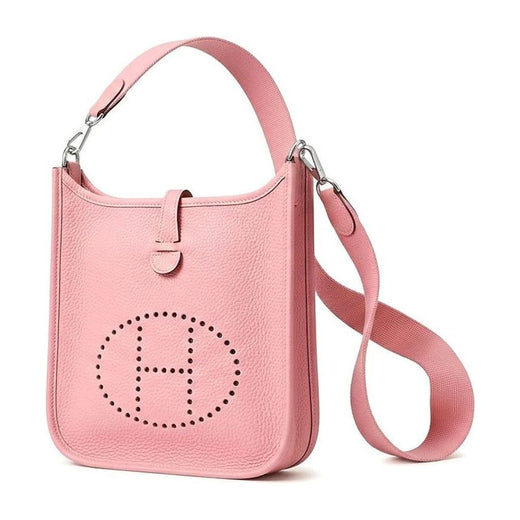
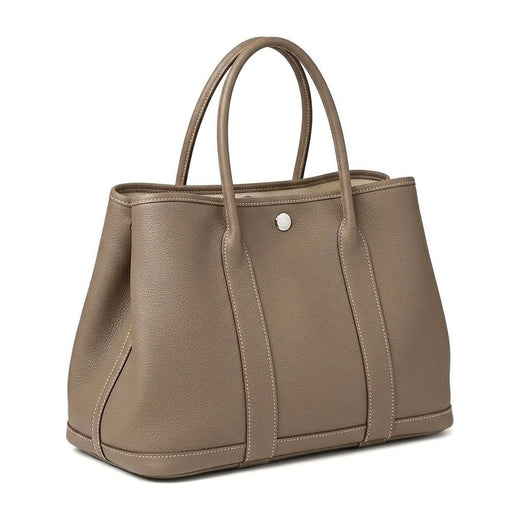
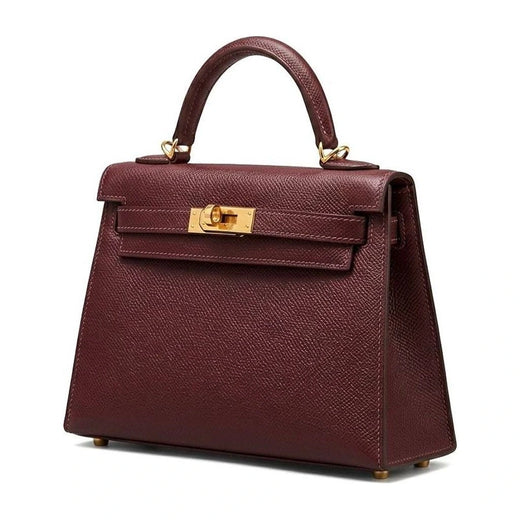
Do not carry Kelly or Garden Party habits onto this bag. The Kelly is authenticated through its closure, the sangles and the turnkey plate, none of which exists here, so our Hermes Kelly guide is the right page for that model. The Garden Party is a canvas and leather tote with a structured base and a lined interior, and its tells sit in the canvas weave and the trim joins, covered in our Hermes Garden Party guide. The Evelyne hangs its whole case on a perforated H the Picotin does not have. What separates the Picotin from all three is that it is unlined, so the interior offers no tag, no lining seam and no pocket to read, and the cadenas carries a share of the evidence it never has to carry on a Kelly. Hardware reading habits do transfer across the house, and the same engraving discipline shows up on jewelry, which is why our Clic H bracelet guide and the Birkin authentication guide are useful company to this one. For a bag outside Hermès authenticated the same way, through its padlock, see our Chloé Paddington guide.
Why the Picotin Is Heavily Counterfeited
Two things make this model attractive to counterfeiters. It is one of the few Hermes bags a buyer can realistically hope to be offered, so demand is broad rather than concentrated among long standing clients, and resale interest holds up across both sizes. And it is structurally simple. A workshop that cannot approximate a Kelly's closure can approximate a bucket with two handles and a padlock, which is why the volume of Picotin copies in circulation is high relative to how few of them survive a close look at the lock.
Counterfeit luxury leather goods remain one of the largest seizure categories reported by U.S. Customs and Border Protection, and the United States Patent and Trademark Office and the International AntiCounterfeiting Coalition both track the same trend across online resale, as does the EU Intellectual Property Office observatory. The practical consequence for a buyer is that the copies reaching you now are photographed well, so the decision has to be made on detail rather than on a general impression.
Cadenas Lock Face Engraving

On an authentic Picotin cadenas the brand name is cut at one consistent stroke weight from the first letter to the last, sitting level on a straight baseline. The counterfeit face fades at the right end, where the final characters lose their cut edges entirely.
- Stroke weight across the word. The authentic characters hold the same weight from the H to the final letter, while on the counterfeit the last two characters shallow out and smear into the surrounding surface.
- Digit shapes. The authentic digits sit on flat cut terminals with straight stems and consistent counters, and the counterfeit digits are rounder overall, with softened terminals and bowls that read thicker than the stems feeding them.
- Dashes flanking the number row. On the authentic face both dashes are short, level with the digit midline and set at matching gaps, and on the counterfeit they sit at uneven distances from the digits they bracket.
- Milled side edges. The authentic body carries fine scalloping of even pitch down both edges, while the counterfeit scallops vary in width and are noticeably deeper on one edge than the other.
- Keyway recess. The authentic circular recess has a defined rim and a narrow keyway cut, and the counterfeit recess is wider and shallower with a soft undefined rim.
- The cadenas number is not a tell. The lock in this comparison carries a different number on each side. Hermès issues cadenas in many numbered runs, so two genuine locks routinely differ. Read how the digits were struck, never which digits they are.
| Element | Authentic | Counterfeit |
|---|---|---|
| Lettering weight | Even from first character to last | Thins and smears at the end of the word |
| Digits | Flat terminals, straight stems, even counters | Rounded terminals, thick bowls, uneven counters |
| Flanking dashes | Short, level, matched gaps | Uneven gaps to the digits |
| Side scalloping | Even pitch on both edges | Variable width, deeper on one edge |
| Keyway recess | Defined rim, narrow cut | Wide, shallow, soft rim |
Photograph the lock face square on, then read the word backwards, last letter first. Reading in reverse stops you predicting the next letter and makes the stroke weight visible.
Don't guess - know for sure
Get independent authentication for your designer items
Blind Stamp Impression Quality

Read the impression, not the characters. An authentic Picotin blind stamp is shallow, and the leather grain continues uninterrupted inside and around each character. The counterfeit stamp is pressed far deeper, crushing the grain into a glossy flattened band around the row.
- Depth. The authentic characters barely break the surface and read faintly at an angle, while the counterfeit characters are sunk deep enough to throw a hard shadow inside every stroke.
- Grain survival. On the authentic strap the pebbling runs straight through the stamped area, and on the counterfeit the grain inside the row is pressed flat and smoothed into a continuous plate.
- Character size relative to the strap. The authentic row occupies a modest band across the strap width, and the counterfeit characters are visibly larger and taller, crowding the space between the two stitch lines.
- Stroke terminals. The authentic strokes end square and thin, while the counterfeit strokes end in rounded burnished rims that catch light along the edge of each character.
- Baseline. The authentic row holds one level baseline across the whole string, and on the counterfeit the group after the letters drops below the line the letters sit on.
| Element | Authentic | Counterfeit |
|---|---|---|
| Impression depth | Shallow, faint at an angle | Deep, hard shadow in every stroke |
| Grain inside the stamp | Pebbling continues through | Crushed flat into a smooth plate |
| Character size | Modest band across the strap | Larger, crowds the stitch lines |
| Stroke terminals | Square and thin | Rounded, burnished rims |
| Baseline | Level across the string | Drifts below the line mid row |
Nothing above involves reading what the stamp says. Character strings do not authenticate a Hermes bag on their own, because a counterfeit can carry a plausible one, and a genuine bag can carry one you have never encountered. The impression is the evidence.
Tilt the leather until the grain inside the characters catches the light. You are measuring how far the tool went in, so what the characters actually say does not enter into it.
Key Bow Engraving on the Clefs

The clef bow is the second half of the lock evidence. On an authentic key the radial ribbing around the bow is short, tightly pitched and uniform in length, and the counterfeit ribbing is longer, spaced further apart and irregular from rib to rib.
- Ribbing pitch. The authentic ribs are numerous, short and evenly spaced around the arc, while the counterfeit uses fewer, longer ribs at a wider pitch.
- Rib containment. The authentic ribs all stop at the same circular border, and several counterfeit ribs run past it or fall short of it.
- Cartouche frame. The authentic rectangular frame around the digits is a fine single line with square corners and even margin on all four sides, and the counterfeit frame is heavier, rounded at the corners and crowded against the digits.
- Digit cutting. The authentic digits hold consistent stroke width with flat tops, while the counterfeit digits vary in weight and their counters read narrower than the strokes around them.
- Bow shoulders. The authentic bow meets the shank with a symmetric notch on both sides, and the counterfeit shoulder is uneven, with one side carrying an extra bump the other does not.
| Element | Authentic | Counterfeit |
|---|---|---|
| Radial ribbing | Short, dense, uniform length | Long, wide pitch, uneven length |
| Rib border | All ribs stop at one circle | Ribs overrun or fall short |
| Cartouche frame | Fine line, square corners, even margin | Heavy line, rounded corners, crowded |
| Digits | Consistent stroke, flat tops | Variable stroke, narrow counters |
| Bow shoulders | Symmetric notch both sides | Uneven, extra bump on one side |
Hold the clef by its blade and rotate it slowly under a lamp. The ribbing is shallow and short, so it only resolves while the light is moving across it.
Authenticate Your Items
From $15 for 12-hour, up to $35 for 30-minute
Dust Bag Weave and Print

A dust bag never authenticates a Picotin on its own, because it is the easiest item in the set to reproduce. What it can do is contradict a bag, and it does that through print line weight and weave density rather than through anything printed on it.
- Print line weight. The authentic roundel is drawn in a thin consistent line, and the counterfeit line is thicker and varies in width around the same circle.
- Roundel scale. The authentic print sits small against the panel, while the counterfeit roundel is enlarged relative to the same bag width.
- Figure detail. The authentic carriage and figures hold separated internal lines, and on the counterfeit those internal lines merge, so the smaller elements read as solid shapes.
- Weave pitch. The authentic herringbone runs fine and tightly packed, and the counterfeit chevron rows are visibly wider, so fewer rows fill the same crop.
- Ink and weave interaction. On the authentic bag the print sits cleanly across the twill, while on the counterfeit the ink spreads along the weave, so the letter edges take on a stepped ragged outline.
| Element | Authentic | Counterfeit |
|---|---|---|
| Print line weight | Thin and consistent | Thicker, varies around the circle |
| Roundel scale | Small against the panel | Enlarged for the same panel |
| Figure detail | Internal lines stay separate | Internal lines merge into blocks |
| Weave pitch | Fine, tightly packed chevrons | Wider chevron rows |
| Edge quality | Clean across the twill | Stepped, ragged, ink spreads |
Use the dust bag to contradict a bag, never to confirm one. Look at it last, and only once the bag itself has already given you an answer to check it against.
Protect yourself from fakes
>99.89% authentication success rate
Red Flags That End the Inspection
A blind stamp deep enough to crush the leather grain into a flattened band around the characters is the single most disqualifying finding on a Picotin Lock. Hermes stamps shallow, and no amount of quality elsewhere on the bag reverses an impression that was pressed rather than set.
- A crushed grain halo around the blind stamp. Depth is the tell that survives every colorway, every leather and every year of production in this comparison.
- Lock face lettering that fades across the word. Even stroke weight from the first character to the last is basic tooling discipline, and losing it at the end of a word means the die was not cut to depth.
- Ribbing on the key bow that overruns its own border. The border exists to stop the ribs, so ribs crossing it mean two separate operations that were never aligned.
- A silhouette with no bucket flare. If the widest point sits at the base and the sides run straight, the panels were cut to a different pattern than the one the bag is named for.
- Blunt side ears with a shallow notch. The peaks and the deep narrow notch between ear and handle are pattern geometry, and a rounded version is not a wear state.
What Current Picotin Copies Get Right
The leather itself is no longer a reliable separator on this model. The grain on current copies is convincing at photo distance, the saddle stitching runs neatly, and the general proportions are close enough that a listing photo taken from a few feet away will not settle anything. What has not moved is tooling depth. Every checkpoint that still works on this bag is a depth or a pitch measurement rather than a shape someone can copy from a picture, which is why the cadenas and the blind stamp carry the guide and the body of the bag does not.
This is also why the concentration of evidence on the lock is a feature rather than a limitation. Three of the checkpoints above sit within a few centimeters of each other, so a seller who provides two clear close ups of the padlock, the keys and the stamped strap has given you almost everything a photo can give.
What You Can Check Yourself and What You Cannot
The checks in this guide transfer through a written page because they are comparative. Depth, pitch, symmetry and stroke weight can all be read from a good photograph once you know which edge to look at. What does not transfer is calibration. Knowing how shallow is shallow enough on a blind stamp, or how fine the ribbing pitch should be, comes from working through many authentic references, which is what an authentication review supplies.
LegitGrails authenticates from photographs, so the guidance here is deliberately limited to what a photograph can carry. I have not written anything in this guide about weight, smell or interior structure, because none of that is in the comparisons above and none of it survives a listing page. If a check cannot be made from an image, it does not belong in a guide meant to be used against an image.
Get 20% Off Your First Authentication
Free authentication guides and expert tips
No spam. Unsubscribe anytime. Privacy Policy
Frequently Asked Questions
Hermes Picotin real vs fake: what should I check first?
Check the cadenas lock face first. On an authentic Picotin the engraved brand name holds one stroke weight from the first character to the last and sits on a level baseline. Counterfeit lock faces commonly thin out toward the end of the word, where the final characters lose their cut edges and blend into the surrounding metal.
How to spot a fake Hermes Picotin from photos?
Ask for three photographs: the lock face straight on, the key bow, and the stamped strap. Then read depth rather than content. An authentic blind stamp is shallow enough that the leather grain runs through every character, an authentic key bow carries short evenly pitched ribbing that stops at its circular border, and an authentic lock face keeps even lettering weight throughout.
Does the Hermes Picotin have a serial number?
No. Hermes bags do not carry a serial number in the way buyers expect from other houses. They carry a blind stamp, a small pressed character string on a leather surface. It is not a lookup code, and reading the characters proves nothing on its own, because counterfeits carry plausible strings too. The impression quality is what matters.
What is a Hermes Picotin dupe and how is it different from a fake?
A dupe is a bucket bag of similar shape sold under its own brand with no Hermes marking on it, and it is a legal product. A fake carries Hermes branding it has no right to. If a listing shows the roundel, the stamped strap or the cadenas and is not sold by Hermes, it is the second thing, not the first.
Are Picotin 18 dupes worth buying instead of the real bag?
That is a budget question rather than an authentication one, and an unbranded bucket bag is a legitimate purchase. The risk begins when a dupe listing quietly drifts into counterfeit territory by adding stamped leather or a padlock. If Hermes branding appears anywhere on it, treat it as a counterfeit and check it as one.
Where do fake Hermes Picotin bags fail most often?
On tooling depth. In the comparison in this guide the counterfeit failed at the blind stamp, which was pressed deep enough to flatten the leather grain into a smooth band, and at the key bow, where the radial ribbing ran long, wide and past the circular border it was supposed to stop at.
Is the Hermes Picotin Lock lined inside?
No, and that is itself an authentication point. The Picotin Lock is unlined, so the interior shows the reverse of the same leather rather than a fabric or a leather lining. A Picotin offered with a lined interior, an interior pocket or a sewn in tag is not built to the model's construction.
How much does Hermes authentication cost?
Professional Hermes authentication from LegitGrails costs $15 to $35 depending on turnaround, from 12 hours down to 30 minutes. Each item is reviewed by up to 4 brand experts. For further Hermes reading, see our Evelyne guide and our Hermes belt guide.