 2 Methods
February 2026 · 6 min read
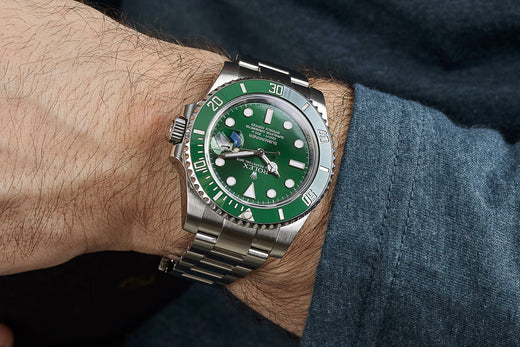
Rolex Hulk Fake vs. Real: How to Spot the ...
7 minutes read.
请按刻字的原样输入序列号,如果有字母,字母在前。
劳力士序列号大致能确定腕表的年代。编号从1926年起按顺序排列,到1987年年中为止;随后是字母前缀阶段,每个字母大致覆盖一到两年,一直到2010年;从2011年起,序列号变为随机生成,完全不携带日期信息。劳力士在1954年从一个很小的数字重新开始编号,因此一个六位数序列号可能属于两个不同的年代,本查询工具会把两种都给出。
如果序列号是真的,它能把一只表定位到某一两年之内。它本身不能证明任何事情。劳力士从未公开过这些对照表,它们都是根据观察到的实物重建出来的,因此这里的每一个答案都是近似值。真正能确定一只劳力士的,是机芯、表盘印刷和表壳打磨,这些都无法从一个号码里读出来。
| 年代 | 标记的样式 | 示例 |
|---|---|---|
| 1987年到2010年,字母加数字 | 一个字母接六到七位数字 | R123456 → 1987年到1988年 |
| 1954年到1987年,第二段连续编号 | 四到七位数字,没有字母 | 5100000 → 1977年到1978年 |
| 1926年到1953年,第一段连续编号 | 四到六位数字,没有字母 | 302459 → 1945年 |
| 2011年及以后,随机生成 | 八位混合字母和数字 | 7A8B9C0D |
根据专业鉴定参考资料整理,并经内部审核。
| 序列号范围 | 年份 |
|---|---|
| 1950年代 | |
| 23,000至96,999 | 1954 |
| 97,000至133,060 | 1955 |
| 133,061至223,999 | 1956 |
| 224,000至327,999 | 1957 |
| 328,000至399,452 | 1958 |
| 399,453至515,999 | 1959 |
| 1960年代 | |
| 516,000至643,152 | 1960 |
| 643,153至743,999 | 1961 |
| 744,000至823,999 | 1962 |
| 824,000至1,008,888 | 1963 |
| 1,008,889至1,099,999 | 1964 |
| 1,100,000至1,199,999 | 1965 |
| 1,200,000至1,538,434 | 1966 |
| 1,538,435至1,751,999 | 1967 |
| 1,752,000至1,899,999 | 1968 |
| 1,900,000至2,241,881 | 1969 |
| 1970年代 | |
| 2,241,882至2,589,294 | 1970 |
| 2,589,295至2,890,458 | 1971 |
| 2,890,459至3,200,267 | 1972 |
| 3,200,268至3,567,926 | 1973 |
| 3,567,927至3,862,195 | 1974 |
| 3,862,196至4,115,298 | 1975 |
| 4,115,299至4,999,999 | 1976 |
| 5,000,000至5,737,029 | 1977至1978 |
| 5,737,030至6,433,999 | 1979 |
| 1980年代 | |
| 6,434,000至6,520,869 | 1980 |
| 6,520,870至7,099,999 | 1981 |
| 7,100,000至7,399,999 | 1982 |
| 7,400,000至8,070,021 | 1983 |
| 8,070,022至8,613,999 | 1984 |
| 8,614,000至8,899,999 | 1985 |
| 8,900,000至9,399,999 | 1986 |
| 9,400,000至9,999,999 | 1987 |
| 1920年代 | |
| 1至20,189 | 1926 |
| 20,190至29,131 | 1927至1930 |
| 1930年代 | |
| 29,132至29,561 | 1931至1932 |
| 29,562至30,822 | 1933 |
| 30,823至34,335 | 1934 |
| 34,336至36,855 | 1935 |
| 36,856至40,919 | 1936 |
| 40,920至43,738 | 1937 |
| 43,739至71,223 | 1938 |
| 71,224至99,774 | 1939 |
| 1940年代 | |
| 99,775至106,046 | 1940 |
| 106,047至143,508 | 1941 |
| 143,509至230,877 | 1942 |
| 230,878至269,560 | 1943 |
| 269,561至302,458 | 1944 |
| 302,459至367,945 | 1945 |
| 367,946至529,162 | 1946 |
| 529,163至628,839 | 1947 |
| 628,840至709,248 | 1948 |
| 709,249至726,638 | 1949至1951 |
| 1950年代 | |
| 726,639至855,725 | 1952 |
| 855,726至999,999 | 1953 |
劳力士在1954年从一个很小的数字重新开始编号,因此一个六位数序列号可能属于两个完全不同的年代。本查询工具会把两种可能都给出,而不是替您选一个。公开的年份对照表同样是根据观察到的实物重建出来的,并不是劳力士自己公布的,因此请把每一个答案都当作近似值。唯一给出误差范围的一份经销商资料,把它定在一到两年,另一份资料解释了为什么无法给出确切数字:字母前缀在年中更换,区间之间也互相重叠。公开的对照表在少数地方甚至自相矛盾,把较晚的年份对应到较小的序列号。这些区间会以窗口的形式给出,而不会被强行归到某一年。
参考编号不是序列号。它标识的是款式本身,不携带生产日期信息。劳力士从未公开过对照这个编号的规则:下面的结构是行业内的惯例,由经销商根据自己经手的腕表重建而成,公开这些内容的页面自己也是这么说的。请把它和序列号一起阅读,而不是用它来替代序列号。
| 参考编号的部分 | 行业内的读法 |
|---|---|
| 开头的数字 | 款式系列。各份经销商指南都把开头的数字描述为款式,但没有一份公开完整的系列对照表,因此本页也不会给出。 |
| 倒数第二位数字 | 表圈类型。 |
| 最后一位数字 | 表壳和表带的金属材质:0代表钢,1代表钢配Everose玫瑰金,2代表钢配铂金,3代表钢配黄金,4代表钢配白金,5代表Everose玫瑰金,6代表铂金,8代表黄金,9代表白金。 |
| 数字后面的字母 | 表盘或表圈颜色后缀,取自法语:LN代表黑色表圈,LV代表绿色,LB代表蓝色。这是整套体系里证据最薄弱的一部分,只依据一个爱好者页面和一份经销商术语表。 |
在2000年代中期之前生产的腕表上,刻在6点方向的表耳之间,表带下方,因此需要先取下表带才能读到。大约从2005年起,序列号也会刻在表圈内环上,即表盘与表镜之间的内圈,位于6点方向;大约从2008年起,内环成了唯一能找到它的地方,一家经销商把这个变化描述为在2008年到2010年之间逐步推行,而不是在某一天统一更改的。参考编号刻在另一侧的表耳之间,位于12点方向,是一个不同的号码。.
表圈内环上还环绕刻着重复的ROLEX字样,12点方向有一个皇冠标志,序列号就位于底部的空隙处。最早带刻字内环的记录是2004年,到2005年变得常见,到2008年每一款Oyster型号都有了这种内环。不同资料把起始时间定在2004年到2007年之间的不同位置,具体取决于产品线,因此2005年只是这个渐进过程中的一个中间点,而不是一次性的切换。从2011年起,序列号变为随机生成,一旦号码给不出年份,保卡或原始购买凭证就成了判断这只表年代的依据。一张与腕表相符的保卡是一个好迹象,但不是证据:它只能确认这张卡和这只表彼此对应,仅此而已。.

从2011年起,每一个劳力士序列号都是随机生成的,转换过程贯穿整个2010年,因此一只现代腕表的号码里根本没有日期信息,任何图表都无法凭空给出。请查看表圈内环,即表盘与表镜之间的内圈,位于6点方向,序列号已经移到了那里。在较旧的腕表上,它刻在表带下方的表耳之间,因此需要先取下表带才能看到。
关于Rolex序列号,人们实际向我们提出的问题,由每天负责解读这些标记的团队为您解答。
在较旧的腕表上,刻在6点方向的表耳之间,表带下方,因此需要先取下表带才能看到。大约从2005年起,它也会出现在表圈内环上,即表盘与表镜之间的内圈。最早带刻字内环的记录是2004年,到2008年每一款Oyster型号都有了内环,大约从2008年起,内环成了唯一能找到它的地方。内环上环绕刻着重复的ROLEX字样,顶部有一个皇冠标志,序列号位于6点方向的空隙处。另一侧、12点方向表耳之间的号码,是参考编号,而不是序列号。
因为劳力士在1954年从大约23,000重新开始编号。因此一个六位数序列号可能属于1926年到1953年那一段,也可能属于1954年到1987年那一段。光靠这个号码本身确实无法区分两者,所以本查询工具会把两种都给出,而不是替您选一个。
说明它属于1987年到2010年之间。这些字母是按顺序发放的,公开对照表把每一个字母都锚定在一个起始序列号上,因此大多数字母只覆盖单一年份,其余的覆盖两年。当一个前缀跨越两年时,您得到的是这个区间,而不是在其中随意猜测:R代表1987年到1988年,号码本身无法把这两年分开。款式、文件和表壳打磨才能进一步缩小范围。
劳力士已经把序列号彻底随机化了。三份经销商对照表都显示,最后一个带日期的前缀G延续到2010年,2011年起的每一年都标注为随机编号。它们对具体转换时间的说法不一致,一份说是2011年年中,另一份说是2010年年末左右,但三份表格都没有把任何字母延续到2011年,因此2010年是最后一个带字母的年份。随机生成的序列号里没有编码任何日期信息,任何工具凭现代劳力士序列号给出年份,都是在猜测。
都是近似值,而且是刻意这样呈现的。劳力士从未公开过序列号对应年份的对照表,因此市面上流通的每一张图表,包括支撑本页的这些,都是根据观察到的实物重建出来的。唯一给出误差范围的一份经销商资料,把它定在一到两年,并说明了原因:表壳和机芯是先批量入库、之后按需组装的,因此即便读法本身正确,它确定的也是零件的年代,而不是成表的年代。另一份经销商资料给出了同样的结论,但没有给出具体数字:字母前缀在年中更换,各区间之间也互相重叠,因此公开的日期只是参考,不是日历上的确定事实。我们没有找到任何资料说明这些对照表究竟是给表壳定年代,还是给机芯定年代,本页也不会去猜测。
严格来说,可能两个都不对。公开的对照表本身在一些地方就互相矛盾,最明显的是1977年和1978年前后,这也是为什么本查询工具在这一段会给出一个区间,而不是替您选一个年份。
不能。仿品上也刻有序列号,一个看起来正确的号码配上一枚错误的机芯,是很常见的组合。以真伪鉴定为生的经销商报告称,同一个序列号会被重复用在许多不同的仿品上,因此一个看起来正确的号码,甚至不能证明它对您这只表来说是独一无二的。保卡对得上号也不是证据。劳力士保卡上印着经销商、购买日期、国家代码、买家、款式和序列号,而卡和表对得上号,只能说明这张卡和这只表彼此相符,不能证明其中任何一个是真品。真正能决定真伪的是机芯、表盘印刷和表壳打磨。
只能大致给出年份。型号信息藏在参考编号里,刻在12点方向的表耳之间,标识的是系列、表圈和金属材质,而不是年代。参考编号的构成方式已在上文说明,那是行业惯例,不是劳力士自己公开的规则。真正重要的是序列号、参考编号、机芯和表壳是否彼此一致。
编码只能缩小范围。以下指南涵盖了编码无法说明的内容:真品Rolex上的机芯、表盘印刷和表壳打磨工艺。Anton K., 自2019年起担任我们的指南作者,其所有鉴定方法均来自我们的鉴定师对200万余件实物记录的经验总结。阅读他撰写的Rolex指南,或浏览免费指南库,涵盖100多个奢侈品牌。
2 Methods
7 minutes read.
 8 Methods
6 minute read.
 7 Methods
 7 Methods
 13 Methods
8 minute read.
获取专家鉴定
>99.89%准确率 · 200万+件已验证