 2 Methods
February 2026
· 6 min read
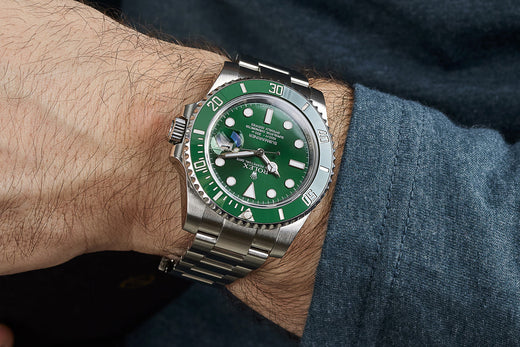
Rolex Hulk Fake vs. Real: How to Spot the ...
7 minutes read.
Enter the serial, not the reference number engraved beside it on the caseback.
A Vacheron Constantin serial number places a watch in a production period. Vacheron has produced continuously since 1755, longer than any other house here, and numbers sequentially rather than encoding a date in the digits. Only partial serial data has ever been published, and some of the years in circulation are interpolated for periods where no accurate records survive, so the bands this checker returns are wide, particularly before 1900. Vacheron does not release its records in full; its Geneva Archive Extract service is the definitive answer.
It places the watch in a period, with a width that reflects how much of the record actually survives. It is not proof of authenticity, and Vacheron says as much of its own archive extract: an extract in no way constitutes a certificate of authenticity. On this brand the serial is one of the weaker signals available anyway: the movement finishing, the Geneva hallmark and the case construction carry far more weight than a number. The serial is most useful when it contradicts something else on the watch.
| Era | What the marking looks like | Example |
|---|---|---|
| 1755 to 2024, one sequential run | Digits only, up to seven of them | 800000 → 2000 to 2004 |
| Beyond the compiled record | Seven digits from 1,100,000 upward | 1200000 |
Compiled from professional authentication references and reviewed in-house.
| Serial range | Year |
|---|---|
| 1750s | |
| 1 to 4,999 | 1755 to 1849 |
| 1850s | |
| 5,000 to 19,999 | 1850 to 1879 |
| 1880s | |
| 20,000 to 49,999 | 1880 to 1899 |
| 1900s | |
| 50,000 to 99,999 | 1900 to 1919 |
| 1920s | |
| 100,000 to 249,999 | 1920 to 1939 |
| 1940s | |
| 250,000 to 399,999 | 1940 to 1959 |
| 1960s | |
| 400,000 to 499,999 | 1960 to 1969 |
| 1970s | |
| 500,000 to 599,999 | 1970 to 1979 |
| 1980s | |
| 600,000 to 699,999 | 1980 to 1989 |
| 1990s | |
| 700,000 to 799,999 | 1990 to 1999 |
| 2000s | |
| 800,000 to 849,999 | 2000 to 2004 |
| 850,000 to 899,999 | 2005 to 2009 |
| 2010s | |
| 900,000 to 949,999 | 2010 to 2014 |
| 950,000 to 999,999 | 2015 to 2019 |
| 2020s | |
| 1,000,000 to 1,099,999 | 2020 to 2024 |
Only partial serial data exists for Vacheron Constantin, and some published years are interpolated where no records survive. The bands are therefore wide, especially before 1900, and that width is the honest shape of the evidence rather than a limitation of this tool. The bands after 1960 rest on a single compilation, and a check against dated auction lots did not reproduce them, so treat a modern answer as a starting point and get an archive extract if the date matters.
A Vacheron Constantin reference is written as a base number, then a slash, then a short group carrying a letter, and often a variant suffix, for example 47200/000G-8445. Dealer listings and auction catalogue descriptions read that letter as the case material, consistently enough to be worth knowing: A steel, G white gold, R rose or pink gold, J yellow gold, P platinum. Vacheron has never published the key, so read this as trade convention corroborated by auction descriptions rather than as a brand table. A reference identifies the model, never the date. The serial is the separate number this checker reads.
| Letter in the reference | Material, as dealers and auction catalogues read it | How well corroborated |
|---|---|---|
| A | Stainless steel | Seen on steel lots in an auction house model guide, 3110V/000A-B426 and 47450/000A-9039, and matches the dealer convention |
| G | White gold | Seen on a white gold Patrimony, 1110U/000G-B086, and on a white gold Patrimony Power Reserve lot, 47200/000G-8445 |
| R | Rose or pink gold | Seen on a rose gold lot, 25592/000R-9763, and matches the dealer convention |
| J | Yellow gold | Seen on a yellow gold Malte, 47112/000J, and matches the dealer convention |
| P | Platinum | Seen on platinum lots, 47212/000P-9250 and 30020/000P-7596 |
| T | Titanium | Stated by a single dealer reference, and corroborated by listings for 5510V/000T-B923, an Overseas Everest chronograph in titanium and steel. Vacheron still publishes no key |
| M | Not established | Seen on a two tone Overseas, 4500V/000M-B127. Neither the dealer convention nor the auction caption explains M, so we do not assert a meaning |
On a modern Vacheron the number you can read without opening anything is engraved on the caseback, next to the reference. The movement carries its own, separate number.
Typical marking 800000
Vacheron's own archive service records case and movement numbers as separate fields, and the two can be hundreds of thousands apart. No source we found says which one the published year tables were built from, and on three dated auction lots we checked the case number landed near its catalogued year while the movement number was a decade or more away. So enter whichever number you have, and read the answer as a period rather than a date.

Either it sits past the end of the compiled record, which thins out on recent watches, or you are reading the reference number rather than the serial. On modern Vacherons the two sit together on the caseback and are easy to confuse. Two definitive routes exist, and they are different documents: the Extract from the Archives records the calibre type, the case and movement numbers, the dial and strap and the dates of manufacture and sale, and needs only those numbers rather than the watch; the Certificate of Authenticity needs the watch examined by the Heritage Department and states the year of manufacture. Both are arranged through a boutique. Pre-1850 pieces almost always need one, because the published record barely covers them.
The things people actually ask us about Vacheron Constantin serial numbers, answered by the team that reads them for a living.
On modern watches a number is engraved on the caseback, alongside the reference. On vintage pieces it is usually between the lugs at 6 o'clock, sometimes under the strap, and occasionally inside the case. The movement carries its own number too, so a case number and a movement number that disagree are not a fault on a Vacheron: they are two separate numbers, and Vacheron's archive records both. Which of the two the published tables were compiled from is not stated anywhere we could find, and dated auction lots fit the case number more often than the movement number, so enter whichever you can read and treat the result as a period.
Because that is what the record supports. Vacheron has produced since 1755 and only partial serial data has been published; for some periods the years in circulation are interpolated rather than documented. The width is not even: the first band covers 1755 to 1849, ninety-five years, because almost nothing survives to split it with, while the modern bands run five years each. Narrowing either would mean inventing precision the evidence does not have.
Yes, and there are two different documents, so ask for the right one. The Extract from the Archives records the calibre type, the case and movement numbers, the type of dial and strap and the dates of manufacture and sale; you provide the case and movement numbers at a boutique and the watch does not have to be examined. Vacheron states that an extract in no way constitutes a certificate of authenticity. The Certificate of Authenticity is the other document: the Heritage Department examines the watch itself, and the certificate states the year of manufacture. Vacheron publishes no price for either, so a boutique has to quote you.
Approximate, and partly interpolated. Vacheron does not release its production records in full, so the tables are compiled from auction records, service documents and horological archives. Treat a band as a reasonable reading of incomplete evidence rather than a fact. We tested the modern end of the table against auction lots that carry both a catalogued year and the watch's numbers, and the bands did not reproduce: on several lots the catalogued year sits four to twenty years away from the band our table returns. That is why this page will not put a single year on a modern Vacheron.
No. The reference identifies the model and carries no date. It is written as a base number, then a slash, then a group with a letter that dealers and auction catalogues read as the case material, so 47200/000G is the white gold version. The serial identifies the individual watch and is the one in this table. On modern casebacks they are engraved next to each other, so check which you are entering.
No, and on this brand the serial is one of the weaker tests available. Counterfeits carry numbers. The movement finishing, the Geneva hallmark and the case construction decide it, and none of those can be read from a serial.
Probably not usefully. Pre-1850 serials are rare and thinly documented, and the first band of the table runs 1755 to 1849 as a result. For a piece that old the Archive Extract is not optional: it is the only route to a real date.
It is a certification mark applied to movements meeting a defined standard of finishing and construction. It speaks to how the watch was made, which is far harder to fake convincingly than an engraved number, and it carries more weight with an authenticator than a serial.
A code narrows things down. These watch guides cover what it cannot: the movement, the dial printing and the case finishing, house by house. Anton K., our guide author since 2019, draws every method from what our authenticators have documented across 2 million+ real items. Browse the full library of free guides covering 100+ luxury brands.
2 Methods
7 minutes read.
 8 Methods
6 minute read.
 7 Methods
 7 Methods
7 minute read.
 12 Methods
9 minute read.
 11 Methods
 2 Methods
7 minute read.
Get expert authentication
>99.89% accuracy · 2M+ verified