 11 Methods
September 2026 · 11 min read
Some houses call it a date code, others a serial number, and Hermès stamps a single letter into the leather instead. This page is the comparison: for each brand you can see what the marking is called, whether it gives a year, and where it sits on the item, then open that brand's checker and read your own. A code can place a piece in its production run, but it never proves the item is genuine.
The blind stamp letter and its frame give the year. Frames stopped after 2014.
The last four digits carry the month and year, interleaved. Codes began in 1997.
The serial gives style and factory. The black tag code gives the year from 2014.
The date code: two letters for country, four digits for date. Ends 2021.
A letter on the interior tag gives the season and year, on bags from 2003 on.
The marking type places the era. The serial itself has no published reading.
Serial series give a window of a year or two. A chip replaced them in 2021.
Sequential to 1987, then a letter prefix. Randomised from 2011 onward.
The creed patch reads month and year, so 1994 to 2006 dates to the month.
Style, material and lot. The date was on the card, never in the number.
The older four-part tag ends in the year. The later single line does not.
The last four digits give the month and year, on bags from the 2012 rebrand on.
Three letters, then six digits: two give the month, four give the year.
On a pre-2009 watch the first two digits are the year. Later ones are random.
One run since the 1890s. Two charts disagree, so the answer is a window.
A single caseback letter gives the exact year from 1998 to 2023.
One run from 1867, published year by year to 1969, so answers are tight.
Sequential since 1868, giving a window for anything up to about 1975.
Assigned in calibre blocks, so a serial honestly spans three to eight years.
Sequential since 1755, but records are partial and some years interpolated.
Compiled from professional authentication reference material and reviewed in-house. A brand appears here only once there is verified reference data behind its checker, which is why this list is shorter than the list of brands we authenticate.
What each code is called, whether it holds a date, and where to find it. Every row is the same reference data the brand's own checker runs on.
| Brand | What the code is called | Gives a year? | Where it sits |
|---|---|---|---|
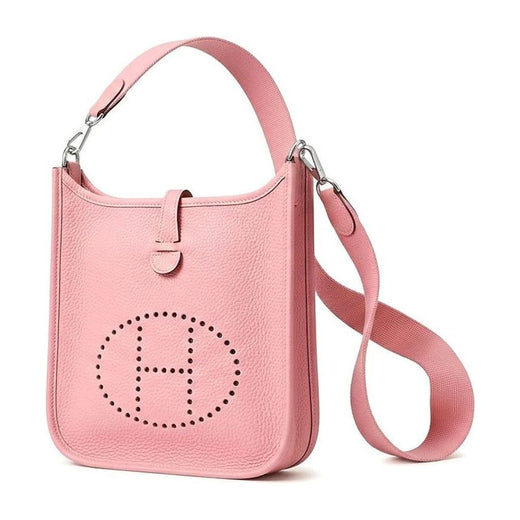
| Hermès | blind stamp | Yes | On a Birkin or a Kelly the stamp sat on the underside of the lock strap, the tab the strap loops through, on every piece made before 2015 |
| Dior | date code | Yes | Usually stamped on the reverse of the interior leather tag, so you have to lift or turn the tag to read it |
| Gucci | serial number | Yes | A Gucci bag carries two separate markings and you need to know which one you are looking at |
| Louis Vuitton | date code | Yes | Stamped or heat pressed into leather or lining rather than printed on a tag |
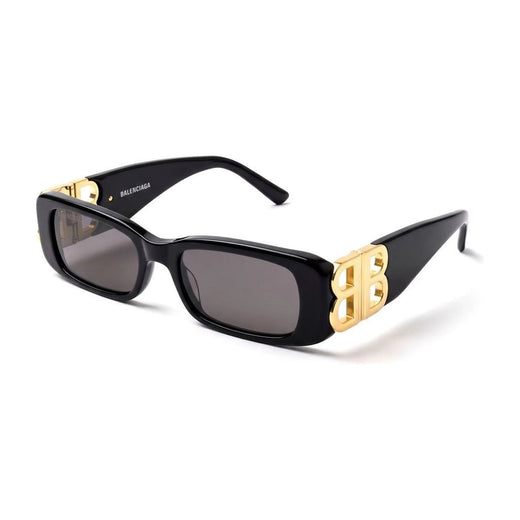
| Balenciaga | interior tag letter | Yes | On the small interior reference tag, often behind the main leather logo tab, inside a pocket or along a seam |
| Fendi | serial number | Era only | On the back of the interior leather brand tag, printed or embossed across one, two or three rows |
| Chanel | serial number | Era only | On a sticker inside the bag, usually under the flap or inside a pocket and protected by a clear film, often on the same panel as the CHANEL MADE IN ITALY heat stamp |
| Rolex | serial number | Era only | On watches up to the mid 2000s, it is engraved between the lugs on the 6 o'clock side of the case, under the bracelet, so the bracelet has to be moved to read it |
| Coach | creed number | Yes | Inside the bag, on the creed: the rectangular leather patch sewn to the lining that carries the Coach paragraph |
| Prada | serial number | No, the code holds no date | Inside the bag, on a small white tag sewn into the lining, usually near the zipped pocket or along an interior seam |
| Bottega Veneta | serial number | Yes | On a narrow, paper-like tag sewn into the lining |
| Saint Laurent | serial number | Yes | On a rectangular leather tag sewn into the lining, usually near the top zip and cut from the same leather as the bag, so it is easy to miss on a dark interior |
| Goyard | serial number | Yes | Stamped into the leather trim inside the bag, and placement varies more than on other houses |
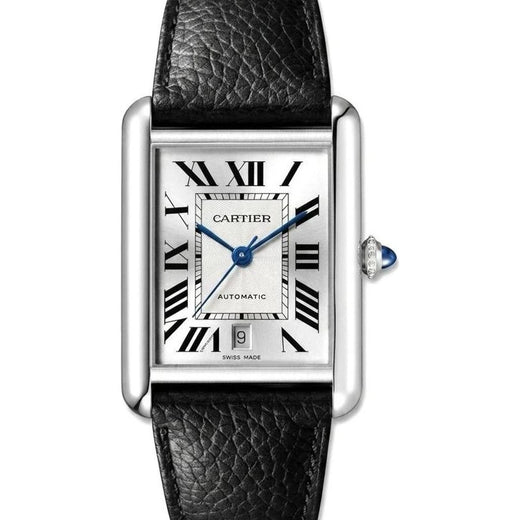
| Cartier | serial number | Yes | On nearly every Cartier watch the serial is engraved on the outside of the caseback, at the bottom or around the outer edge, so nothing has to be opened to read it |
| Omega | serial number | Yes | The number the year charts track is the movement serial, engraved on a bridge or a plate inside the watch, so the caseback has to come off, which is a watchmaker's job |
| Panerai | caseback marking | Yes | All of it is on the caseback |
| Longines | serial number | Yes | The number this table dates is on the movement plate, usually near the balance wheel or on the main bridge, so the case has to be opened to read it |
| IWC Schaffhausen | serial number | Yes | The number this table dates is the movement number, engraved on the movement bridge and readable only with the caseback off, or through the crystal on a watch with a display back |
| Jaeger-LeCoultre | serial number | Yes | The number this table dates is the movement serial, engraved on the movement plate next to the calibre marking |
| Vacheron Constantin | serial number | Yes | On a modern Vacheron the number you can read without opening anything is engraved on the caseback, next to the reference |
The things people ask us most often about codes, stamps and date marks, answered by the team that reads them for a living.
No. A code is a manufacturing marking, and counterfeiters copy markings. Read correctly, it places a piece in its production run and rules out the crudest fakes. That makes it a floor rather than a verdict: leather, stitching and hardware still need a trained eye.
Because not every brand encodes one. Hermès, Dior and Louis Vuitton put production dates into their markings, so a year can be read from the code. A Prada serial gives the style, the material and the lot, and never held a date at all: for Prada, the date was printed on the authenticity card. The tiles above say which is which, brand by brand, rather than inventing a year for the ones that have none.
Usually not. Louis Vuitton moved to an embedded microchip in March 2021 and Chanel at about the same time, and Hermès moved its stamp position in 2015. Far more often you are looking in the wrong place, or at a recent item.
Because for most brands there is nothing to check. A tool that returns a year for a code holding no year is a guess dressed up as an answer, and several published checkers do exactly that. A brand appears above only when verified reference data supports it, so this list is deliberately shorter than the list of brands our team authenticates.
They come from professional authentication references, cross-checked against dated examples and reviewed in-house. Where the sources disagree, the page says so.
It depends on the brand and often on the era. Each brand's own page says where to look, which is usually the answer when someone believes their item carries no marking.
Only indirectly. It places production in an era, and versions of a model do differ in value. It says nothing about condition, completeness or demand.
Check which part of the marking they read. Several published checkers count letters straight through the alphabet, which stopped being correct for Hermès after 2014.
Nothing, in practice. They are the same idea under different names: a marking the maker puts on an item to record what it is and when it was made. Louis Vuitton and Dior call it a date code, Gucci and Prada call it a serial number, Hermès presses a single letter into the leather and calls it a blind stamp. The page you need is the one for your brand, not the one that matches the words you searched.
No, and that is why there are twenty separate checkers here rather than one universal decoder. Every house invented its own scheme, several changed it more than once, and a few encode no date at all. A single box that claimed to read any brand's code would have to be guessing for most of them. The table above says which brands give a year and which do not, before you type anything.
A code narrows things down. These guides cover what it cannot: the stitching, the hardware and the leather, brand by brand. Anton K., our guide author since 2019, draws every method from what our authenticators have documented across 2 million+ real items. Browse the full library of free guides covering 100+ luxury brands.
11 Methods
 13 Methods
 2 Methods
7 minutes read.
 5 Methods
10 minute read.
 11 Methods
 11 Methods
 11 Methods