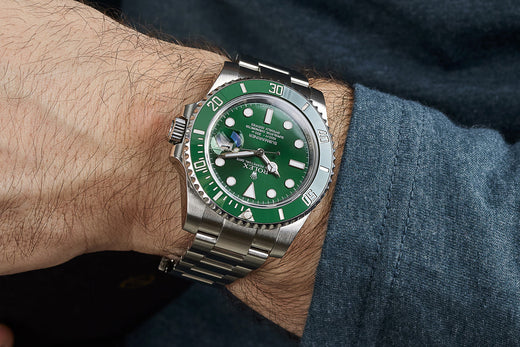
 2 Methods
February 2026
· 6 min read
Rolex Hulk Fake vs. Real: How to Spot the ...
7 minutes read.
Enter the serial from the movement plate. If you can read the calibre number too, keep it to hand.
A Jaeger-LeCoultre serial number places a movement in a period between 1833 and the present. JLC has numbered sequentially since 1833, but the compiled ranges overlap rather than meeting end to end, and the guide that puts a figure on the overlap says three to eight years, so a single serial rarely resolves to one year. The case was often assembled one to two years after the movement, so the finished watch can be younger than its own number suggests. Every range in circulation is reconstructed by collectors from observed watches and shared archive extracts, never published by JLC.
It places the movement in a period, and it says so as a span rather than pretending to a year. It proves nothing about authenticity. The calibre number, if it is legible on the movement, narrows the date far more than the serial does, and the two together are what an authenticator reads. A mismatch between the serial and the calibre is a real finding; a serial on its own rarely is.
| Era | What the marking looks like | Example |
|---|---|---|
| 1833 to 2024, one sequential run | Digits only, up to seven of them | 1600000 → 1965 to 1969 |
| Beyond the compiled record | Seven digits from 4,000,000 upward, or eight digits | 4200000 |
Compiled from professional authentication references and reviewed in-house.
| Serial range | Year |
|---|---|
| 1830s | |
| 1 to 9,999 | 1833 to 1869 |
| 1870s | |
| 10,000 to 49,999 | 1870 to 1879 |
| 1880s | |
| 50,000 to 149,999 | 1880 to 1889 |
| 1890s | |
| 150,000 to 299,999 | 1890 to 1899 |
| 1900s | |
| 300,000 to 499,999 | 1900 to 1909 |
| 1910s | |
| 500,000 to 699,999 | 1910 to 1919 |
| 1920s | |
| 700,000 to 899,999 | 1920 to 1929 |
| 1930s | |
| 900,000 to 1,099,999 | 1930 to 1939 |
| 1940s | |
| 1,100,000 to 1,299,999 | 1940 to 1949 |
| 1950s | |
| 1,300,000 to 1,399,999 | 1950 to 1954 |
| 1,400,000 to 1,499,999 | 1955 to 1959 |
| 1960s | |
| 1,500,000 to 1,599,999 | 1960 to 1964 |
| 1,600,000 to 1,699,999 | 1965 to 1969 |
| 1970s | |
| 1,700,000 to 1,799,999 | 1970 to 1974 |
| 1,800,000 to 1,899,999 | 1975 to 1979 |
| 1980s | |
| 1,900,000 to 1,999,999 | 1980 to 1984 |
| 2,000,000 to 2,099,999 | 1985 to 1989 |
| 1990s | |
| 2,100,000 to 2,199,999 | 1990 to 1994 |
| 2,200,000 to 2,349,999 | 1995 to 1999 |
| 2000s | |
| 2,350,000 to 2,499,999 | 2000 to 2004 |
| 2,500,000 to 2,699,999 | 2005 to 2009 |
| 2010s | |
| 2,700,000 to 2,999,999 | 2010 to 2014 |
| 3,000,000 to 3,399,999 | 2015 to 2019 |
| 2020s | |
| 3,400,000 to 3,999,999 | 2020 to 2024 |
The compiled ranges overlap rather than meeting end to end, so a serial can honestly belong to a span of three to eight years. The case was often assembled one to two years after the movement, so the watch can be younger than its own number. The reason usually given for the overlap is that Jaeger-LeCoultre allocated numbers in blocks by calibre rather than strictly in date order. We went looking for that claim and found it stated in only one place, a collector forum post whose author hedges it, so the overlap is what the sources document and the reason for it is not.
A modern Jaeger-LeCoultre reference is written as Q and seven digits, for example Q1288420, and retailers list the same watch with and without the Q and in a dotted form such as 128.84.20. Older catalogue references are written in three parts, like 270.8.08. None of them is the serial: the number engraved on the case is a different number again, and the calibre marked on the movement is a third. Jaeger-LeCoultre does not publish what the digits after the Q encode, and no source we could read decodes them, so this checker reads the movement serial and does not decode a reference. Because the papers carry the catalogue reference while the case carries the case number, the two are expected to differ.
The number the year table dates is the movement serial, engraved on the movement plate next to the calibre marking. Read it through an exhibition back, or have a watchmaker open a solid caseback.
Typical marking 1600000
The movement number and the case number of the same watch are often nowhere near each other. Professional references locate the serial on the movement, on the back or under the dial, and none we could read places it on a caseback plaque, between the lugs at 6 o'clock or on the Reverso's swivel cradle, so we do not claim one.

Most likely it is past the end of the compiled record, which is collector work rather than a published table and thins out on recent watches. It may also be that you are reading the case number rather than the movement serial, which on nearly every JLC needs the caseback opened. Either way there is a definitive route: Jaeger-LeCoultre keeps records back to 1833, and its Heritage department issues an Extract from archives against photographs of the watch, the movement and the engraved numbers, for a stated 300 CHF. For a modern piece that is the only real answer.
The things people actually ask us about Jaeger-LeCoultre serial numbers, answered by the team that reads them for a living.
On the movement plate on nearly every era, which means the caseback has to come off unless the watch has a display back. A Jaeger-LeCoultre also carries a case number, engraved on the case and belonging to a different series: auction catalogues print the two side by side and they are nowhere near each other. A number on the outside of the case is usually that case number or the catalogue reference, not the movement serial this table reads.
Because the compiled ranges overlap rather than meeting end to end, by three to eight years on the one guide that states a figure. Two watches built in the same month can carry numbers far apart. A tool that gives you a single year from a JLC serial is choosing a point inside a range the data does not resolve. The explanation collectors give is that JLC allocated runs of numbers by movement calibre rather than strictly in build order, so two numbers close together can belong to movements built years apart. We tried to source that and could find it stated only once in public, in a forum post whose author flags it as his own recollection; Jaeger-LeCoultre has published nothing on it, and the reference book collectors point to could not be read anywhere online. So treat the overlap as the documented half and the reason as collector lore.
On the movement, marked next to the serial, so the same exhibition back or caseback opening shows you both. The calibre identifies the movement design, and it narrows the date far more than a serial whose range overlaps its neighbours by years. Reading the two together is what an authenticator does. This checker takes the serial only: no source we can use maps a JLC calibre to a production window, so asking you for the calibre would be theatre.
Not necessarily. Cases were frequently assembled one to two years after the movement was made, so a watch can genuinely be younger than its movement serial. A gap of a year or two is normal. A gap of decades is not.
Yes. The Heritage department issues an Extract from archives with the original technical details for your watch. You send photographs of the watch front and back, of the movement, and of the engraved numbers and hallmarks, rather than the watch itself. Jaeger-LeCoultre's own page states the fee as 300 CHF, gives the delivery time as about two months, and says every extract is written in English. It limits the service to watches without a reference engraved in the XXX.X.XX format, and to vintage or Atmos clocks more than thirty years old. It also says an extract can under no circumstances be considered a certificate of authenticity, so it dates the watch rather than vouching for it. For a Reverso the request also wants photographs of the numbers on the cradle, inside the case back and on the bezel. For any modern watch, and for any watch where the date actually matters, that is the answer rather than a chart.
They are approximate and openly reconstructed. They come from collector-documented examples, long-running research databases and confirmed archive extracts, not from JLC, which has never published a serial-to-year table.
No. Serial numbers are engraved on counterfeits too. What is hard to fake is agreement between the serial, the calibre, the case reference and the finishing of the movement, and that is what an expert check examines.
Not quite, and it matters for dating. Watches sold in North America were often branded LeCoultre and distributed separately, and their numbering does not always line up with the European records. If your dial says LeCoultre without the Jaeger, treat any chart answer with extra caution and go to the archive.
A code narrows things down. These watch guides cover what it cannot: the movement, the dial printing and the case finishing, house by house. Anton K., our guide author since 2019, draws every method from what our authenticators have documented across 2 million+ real items. Browse the full library of free guides. LegitGrails authenticates 600+ brands.
2 Methods
7 minutes read.
 8 Methods
6 minute read.
 7 Methods
 7 Methods
7 minute read.
 12 Methods
9 minute read.
 11 Methods
 2 Methods
7 minute read.
Get expert authentication
>99.89% accuracy · 2M+ verified