How to Tell If a Hermès Mini Kelly Is Real
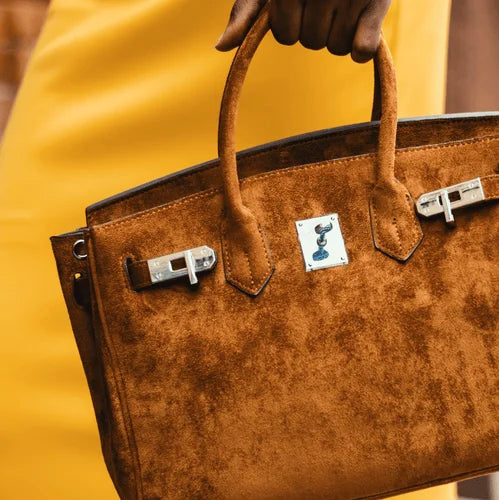
A real Hermès Mini Kelly is separated from a counterfeit by three things you can photograph. The strap clasp, where the engraved word sits centered and the plating wears evenly across the whole face. The zipper, where the pull and the teeth are finished as one part. And the blind stamp, where the impression matters far more than the characters it spells.
The Mini Kelly is the 20 cm version of a bag made in the Paris ateliers since the 1930s and named after Grace Kelly in 1977. It is the hardest size to be offered and carries the steepest resale premium in the line, which is why it draws counterfeiters. Hermès neither publishes a Kelly price list nor sells the bag from an open shelf, so almost every Mini that changes hands does so privately, from photographs, between strangers.
About the photographs. This guide is built from five photo pairs, each one an authentic Kelly beside a counterfeit. Some of those reference bags are full size Kellys rather than Minis. That weakens nothing here. Every checkpoint below reads hardware, a stamp or a printed mark that Hermès produces to one specification at every size, so the clasp engraving, the zipper pull, the heat stamp and the blind stamp are the same objects on a Mini as on a 28. Only body proportion changes with size, and proportion was never the check. Every claim below is visible in the image above it, and where a checkpoint cannot survive a photograph I say so rather than invent a rule.
| Checkpoint | What to Inspect | Reliability |
|---|---|---|
| Blind stamp impression | Depth, terminal shape, whether the K diagonals meet the stem | ★★★★★ |
| Strap clasp engraving | Letter spacing, position of the flanking dashes, how the plating wears | ★★★★☆ |
| Zipper pull and teeth | Arm thickness on the H, tooth pitch, whether pull and teeth match | ★★★★☆ |
| Dust bag print | Line weight in the roundel, how the ink sits on the twill | ★★★☆☆ |
How the Mini Kelly Differs From the Full Size Kelly
The Mini is the same bag built at 20 cm, keeping the flap front, the two straps over a turn-lock plate and the lockable clasp on a detachable strap. Crucially the hardware does not shrink with the body, so the clasp, the zipper pull and the stamps stay at production size and the smaller format gives a counterfeiter no help. For the 25, 28 and 32 read our full size Kelly guide. That is why this guide leans on the clasp and the zipper, parts the sibling models do not have. If you are checking a flat perforated shoulder bag, read our Hermès Evelyne guide. For the bucket tote, read the Picotin Lock guide, and for the open canvas and leather tote, the Garden Party guide. Outside Hermès the closest structured flap bag is the Capucines, covered in our Louis Vuitton Capucines guide.
Why the Mini Kelly Is Heavily Counterfeited
Three facts drive it. A Mini Kelly is not something you walk in and buy, which pushes buyers toward strangers' listings. The resale multiple makes a convincing copy worth real money to produce rather than a novelty. And search demand runs the wrong way: far more people look for a Mini Kelly dupe than ask whether the bag in front of them is authentic, so most buyers meet a copy before they meet a checklist.
The Strap Clasp and Its Engraving

On an authentic Kelly strap clasp the engraved word is compact and centered on the plate, with the flanking dashes close to the first and last letters. The counterfeit spreads the same word wider and pushes both dashes out toward the edges.
- Letter spacing. The authentic engraving keeps even, narrow gaps between characters so the word occupies the middle third of the plate, while the counterfeit sets the letters further apart and the word runs closer to the sides.
- Flanking dashes. On the real clasp both dashes sit at the letter midline and almost touch the word, while on the counterfeit they sit further out with an obvious gap on each side.
- Plating condition. The authentic plate carries an even scatter of fine wear marks across its entire face, so the surface ages as one piece. The counterfeit plate stays mirror smooth over most of its area and then breaks into isolated pits and speckles, which is wear appearing in patches rather than across the part.
- Gate joint. In the lower left crop the authentic hook meets its gate as one continuous edge with no step. The counterfeit crop shows the two surfaces sitting at different heights where they meet, leaving a visible ledge.
- Hook nose. The authentic hook tapers to a rounded nose. The counterfeit nose is broader and flattens off at the tip instead of tapering.
| Element | Authentic | Counterfeit |
|---|---|---|
| Word width on the plate | Compact, sits within the middle third | Spread wide, runs toward both edges |
| Flanking dashes | Tight to the letters, on the midline | Set outward with a gap at each end |
| Plating wear | Even fine marking across the whole face | Mirror areas broken by isolated pits |
| Gate joint | Continuous edge, no step | Visible ledge where the surfaces meet |
| Hook nose | Rounded taper | Broad and flat at the tip |
Set the plate level and look at the space between the dashes and the word rather than at the word. Spacing is the measurement here and the lettering is what pulls your eye away from it.
The H Zipper Pull and the Teeth Below It

The clearest zipper tell on this pair is that the counterfeit pull and the counterfeit teeth do not match each other. The teeth read warm gold, the pull above them reads darker, and both parts belong to the same zipper.
- Two tone mismatch. On the authentic zipper the pull and the teeth are finished as one part and read as one piece of hardware. On the counterfeit the teeth are noticeably warmer than the pull hanging directly above them, which is a sourcing failure visible in a single frame.
- Arms of the H. The authentic pull has four arms of matching thickness with the crossbar at mid height, leaving two square openings of equal size. The counterfeit thickens the arms and raises the crossbar, so the lower openings are smaller than the upper ones.
- Tooth pitch. Authentic teeth repeat at a constant interval with a constant gap. Counterfeit teeth vary in length along the run and the gaps between them open and close, so the two rows do not interlock evenly.
- Tooth face. Each authentic tooth presents a squared outer face of the same width as its neighbors. Counterfeit teeth are rounded off at the outer edge and several are wider than the ones beside them.
- Pull hang. The authentic pull sits square on the slider and hangs on the tape centerline. The counterfeit pull sits cocked to one side of the tape.
| Element | Authentic | Counterfeit |
|---|---|---|
| Pull against teeth | One finish across both parts | Warm gold teeth under a darker pull |
| H crossbar | At mid height, openings equal | Raised, lower openings smaller |
| Arm thickness | Four arms of matching weight | Thickened arms, narrowed openings |
| Tooth pitch | Constant interval and gap | Length and gap both vary along the run |
| Pull position | Square on the tape centerline | Cocked to one side |
Compare the pull against its own teeth before comparing either against a reference. A mismatch inside one zipper is self-evident and needs nothing external to check it.
Authenticate Your Kelly
Get independent authentication for your designer items
The Heat Stamp Word Spacing

On a counterfeit Hermes Kelly the heat stamp here reads MADE INFRANCE, with the word space between IN and FRANCE closed up. An authentic stamp keeps that gap open. A typesetting error cannot be explained away as a variant.
- The missing word space. This is the decisive finding. The authentic second line sets MADE, IN and FRANCE as three words with even gaps. The counterfeit runs IN and FRANCE together so they read as one word.
- The accent on the E. The authentic acute is a short fine stroke sitting close over the letter. The counterfeit accent is a thick blob set high and to the right, large enough to crowd the character beside it.
- Letter tracking. The authentic characters are finely cut with consistent spacing across both lines. The counterfeit letters are wider and heavier, so the first line runs longer and the tracking tightens toward its end.
- Read the letterforms only. These two bags are different colourways with different hardware, so nothing about tone, plating or leather is evidence here. The stamp is.
| Element | Authentic | Counterfeit |
|---|---|---|
| Second line | MADE IN FRANCE, three separated words | MADE INFRANCE, gap closed |
| Acute accent | Short fine stroke, set close | Thick blob, set high and wide |
| Letter weight | Finely cut, even tracking | Wider and heavier, tracking drifts |
| Colour and plating | Not a tell, the samples differ | |
Zoom until MADE IN FRANCE fills the frame and read the gaps rather than the letters. A closed word space is a typesetting fault and no amount of wear can produce it.
The Blind Stamp, and Why Its Content Proves Nothing

A Hermes Kelly blind stamp cannot be authenticated by reading its characters. On this pair the authentic stamp reads KHT138 with ZP below it and the counterfeit reads KHT511ZF, so both open with the same three characters. Both begin with the same three characters, which is the whole lesson. A counterfeit can carry a plausible looking string, so the impression is the evidence and the characters are not.
I want to be blunt, because this is the most misused checkpoint on the Kelly. People photograph the stamp, type the characters into a forum and treat the answer as a verdict. A counterfeiter can select any string. What a counterfeiter has to reproduce is the physical act of pressing it.
- Depth. The authentic characters are pressed deep enough that each stroke sits in a clear trough with the grain compressed at the bottom. The counterfeit strokes are shallow and sit close to the surface, so the character reads mostly as a shadow.
- Terminals. Authentic stroke ends stop square, with a defined corner where the stroke terminates. Counterfeit terminals are rounded and taper away, so the ends of the strokes fade rather than stop.
- The K. In the authentic close crop both diagonals of the K meet the vertical stem at one point. On the counterfeit crop the diagonals land separately, leaving a gap between the upper arm and the stem.
- Baseline. The authentic characters sit on one straight baseline at one height. The counterfeit characters drift, with the middle of the string riding above the line and the character heights varying across the row.
- Flaking inside the strokes. The counterfeit strokes show bright broken material inside the impression, where the surface has cracked instead of compressing. The authentic strokes stay whole, with the leather displaced rather than torn.
| Element | Authentic | Counterfeit |
|---|---|---|
| Impression depth | Deep trough, grain compressed at the base | Shallow, reads as a surface shadow |
| Stroke terminals | Square, defined corners | Rounded, taper away |
| K construction | Diagonals meet the stem at one point | Diagonals land apart, gap at the stem |
| Baseline | Straight, uniform character height | Drifts, heights vary across the row |
| Inside the strokes | Leather displaced, surface intact | Cracked and flaking within the impression |
Judge the impression and then stop. The moment you find yourself turning the characters into a year, you have left the evidence and started guessing.
Don't guess - know for sure
Reviewed by up to 4 brand experts, >99.89% accuracy rate
The Dust Bag Print

The authentic dust bag prints its roundel on a fine herringbone twill, so the outline holds one line weight all the way round. The counterfeit prints on a coarser weave, and the strokes thicken and break where they cross it.
- Weave scale. The authentic twill runs a fine chevron repeat, with many rows across the width of the roundel. The counterfeit chevron is noticeably larger, so fewer rows fall inside the same printed area.
- Line weight. The authentic outer circle keeps one thickness through its full circumference. The counterfeit circle swells and thins as it travels, so the ring is not the same weight top and bottom.
- Figure separation. In the authentic crop the horse, the harness lines and the standing figure stay as separate shapes with clear ground between them. On the counterfeit these run together, and the harness merges into the animal.
- The pendant ring. The authentic ring above the H is a clean circle with an even stroke and clear space where it meets the roundel below. The counterfeit ring is squashed out of round and thickens at the join.
- Print on the weave. Authentic ink sits down into the twill so the edge of each stroke is continuous. Counterfeit ink rides on the raised threads, leaving a stepped, saw toothed edge on every stroke.
| Element | Authentic | Counterfeit |
|---|---|---|
| Herringbone scale | Fine chevron, many rows per roundel | Coarse chevron, few rows per roundel |
| Outer circle | One line weight all the way round | Swells and thins around the ring |
| Carriage detail | Horse, harness and figure stay separate | Shapes run together |
| Pendant ring | True circle, even stroke, clear join | Out of round, thickens at the join |
| Stroke edges | Continuous, ink sits into the weave | Stepped and saw toothed on the threads |
Hold the dust bag so the twill runs diagonally across your view. The roundel is printed into the weave, so the weave has to be visible before line weight means anything.
Your luxury, verified
Trusted by over 100,000 customers worldwide
Red Flags That End the Inspection
One finding ends it on its own. If the zipper pull and the zipper teeth are two different finishes on the same zipper, stop. No Hermès workshop sources a pull and a chain of teeth from different suppliers and fits them to one bag.
- Two tone hardware on one zipper. Warm teeth under a darker pull is a sourcing failure, and it cannot be explained by wear because both parts age in the same place under the same hand.
- Flaking inside the blind stamp strokes. Cracked, bright material inside the impression means the leather tore rather than compressed, which points at the wrong tool at the wrong temperature.
- A stepped joint on the clasp gate. A ledge where the hook meets its gate is a mold seam that was never dressed, and it will not appear on a part that has been finished properly.
- Mirror plating broken by isolated pits. Wear that shows up in a few discrete spots rather than across the whole face indicates a thin plate over a substrate that is already failing.
- Saw toothed strokes on the dust bag roundel. Ink that steps along the raised threads instead of sitting into the twill means the print never keyed to the fabric.
What Current Superfakes Get Right
The counterfeit in these photos gets the shapes right. The clasp silhouette is correct, the engraved word is spelled correctly with its flanking dashes, the zipper pull is a properly proportioned H, and the blind stamp opens with the same three characters as the real one. None of the old shortcuts are visible. What it does not get right is what happens after the shape is correct, which is the finishing. The plating is applied thin, the mold seams are not dressed, the stamping tool is not hot enough or is not pressed hard enough, and two hardware parts on the same zipper come from two different sources. That is the current state of the art, and it is consistent with what the International Trademark Association reports across the category. The tooling has caught up. The process control has not.
What You Can Check Yourself and What You Cannot
A photo based check on a Kelly is limited, and I would rather say that than oversell it. The strongest public signals that survive a photograph are the hardware finishing and the blind stamp impression. Leather grain, stitch angle and interior texture need side by side reference experience to read, and a single listing photo will not give you that.
Here is the honest split. Anyone can learn the clasp engraving spacing, the zipper two tone mismatch and the impression quality of the blind stamp, because each is a comparison against itself rather than against a memory. What does not transfer through a written guide is the read on leather. Every Kelly is cut from a different hide in a different tannage, so grain is a sample of one and a photograph flattens it. The same applies to stitch angle, which changes with the light and the lens. If your only evidence is a seller's photo set with no hardware close ups, you do not have enough, and no guide can fix that. Buying from a channel with recourse matters as much as any single tell, and StopFakes.gov and U.S. Customs and Border Protection both publish practical guidance for buyers on that point.
Get 20% Off Your First Authentication
Free authentication guides and expert tips
Frequently Asked Questions
How can you tell if a Hermes Mini Kelly is real?
Look at the zipper. If the pull and the teeth are two different finishes on the same zipper, the bag is counterfeit. It takes one photograph and it does not require you to know anything about leather, stamps or model years.
How do you spot a fake Mini Kelly from photos alone?
Request close ups of the strap clasp face, the zipper pull with the teeth in the same frame, and the blind stamp. Those three frames carry the checkpoints that survive photography. Full bag shots and interior shots rarely settle anything on their own.
Where is the Hermes Mini Kelly serial number?
Hermès does not use a serial number in the way a watch brand does. The bag carries a blind stamp pressed into the leather. Treat it as a physical impression to assess, not as a code to look up, because a counterfeit can carry a plausible looking string.
Does the blind stamp prove a Mini Kelly is authentic?
No. In the pair photographed for this guide the authentic stamp and the counterfeit stamp open with the same three characters. What separates them is the impression, meaning depth, square stroke terminals, a straight baseline and whether the leather compressed or cracked.
Is a Hermes Mini Kelly dupe the same thing as a replica?
No, and the distinction decides whether this guide applies. A Mini Kelly dupe is a differently branded bag in a similar shape, legal to buy and sell, with nothing to authenticate. A replica carries the Hermès name and the marks it is not entitled to. The moment a listing shows the roundel, the clasp engraving or a blind stamp at a low price, it is the second thing, and every check in this guide applies to it.
Can an authentic Hermes Mini Kelly have plating wear?
Yes, and even wear is normal. What matters is the pattern. Authentic hardware marks evenly across the whole face over time. Isolated pits breaking through an otherwise mirror surface point at a thin plate rather than at honest use.
Do these checks work on a full size Hermes Kelly?
Yes, and that is why some of the reference photographs here show a full size Kelly. The clasp engraving, the zipper pull and teeth, the heat stamp and the blind stamp are produced to the same specification at every size, so the checks transfer in both directions. Only the body proportion changes, and proportion was never the check.
How much does Hermes Mini Kelly authentication cost?
Our Hermès authentication service runs from $15 for a 12 hour turnaround up to $35 for 30 minutes. Each submission is reviewed by up to 4 brand experts from your photographs.