How Resellers Authenticate Designer Bags
To authenticate designer bags for resale, screen the seller before you buy, then give every bag the same 10-minute intake screen: paperwork, identifiers, materials, construction and consistency. End the screen with one decision: clear to list, send for authentication, or return to source. Keep a photo file for every bag, pay for expert authentication on high-value or unfamiliar pieces, and learn the brands you stock most.
Every designer bag you resell has two prices: the one you pay, and the one it costs you if it turns out to be fake. A counterfeit in your stock can mean a refund, a lost sale, a warning on your selling account and a buyer who doesn't come back.
Ask on a flipping forum how to start with designer bags and the usual answer is blunt: learn to tell the fakes from the real thing first, because nobody who knows will teach you. This guide is that method, at the level a reseller needs, from buying stock to handling a rejected sale.
If you are still setting up the business itself, start with our guide to starting out as a reseller and come back when the first bags arrive.
Before You Buy Stock: Seller Risk Signals
Most fakes enter a reseller's stock at the buying stage, while the bag is still in someone else's hands and you are judging it from photos and a story. Read the seller and the offer as carefully as the bag. None of the signs below proves a bag is fake. Each one is a reason to slow down and ask for more.
- The price has no explanation. Compare it with what the same model in the same condition has actually sold for recently. A large gap needs a reason you can check.
- The proof is all in the extras. "Comes with dust bag, box and receipt" is a line resellers see again and again on listings for fakes. Packaging, cards and receipts are sold separately online. They support a verdict; they don't make one.
- The photos are not of this bag. Stock images, photos reused across listings, or a set that never shows the interior. Ask for a new photo of a detail you choose, such as the date code or heat stamp beside a handwritten note with today's date.
- Detail photos are refused. A seller with an authentic bag can photograph the stamp, the serial or date code, the hardware engravings and the lining in a few minutes. Refusal is information.
- The story and the bag disagree. A bag "bought in Paris in 2019" whose date code points to another country or year. A "barely used" bag with darkened handles.
- Pressure and off-platform payment. Countdowns, "other buyers are waiting", bank transfers, gift cards or payment links sent in chat. Buyer protection usually covers only payments made through the platform's own checkout.
- No history. A new account, no reviews, or several identical new bags from someone "clearing out a closet".
Take extra care with lots. One fake in a lot of ten can cost more than the margin on the other nine.
Show answer
Ask for a new detail photo of your choosing and keep payment on the platform. A price gap, extras as proof and off-platform payment are each a reason to slow down.
Intake Screening in 10 Minutes
Every bag that enters your stock gets the same short screen before it is photographed for a listing. The screen is a compressed version of the five layers of evidence professional authenticators work through, which we explain in full in how professionals authenticate designer bags. Its job is triage. It ends with a decision about what happens to the bag next.

- Minutes 0–2: paperwork and extras. Note what came with the bag: dust bag, box, card, receipt. Check that their details agree with each other and with the bag. Give them little weight, because they are the easiest part of a bag to copy.
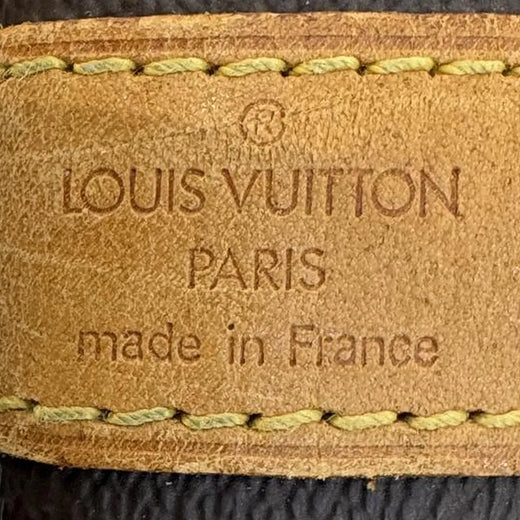
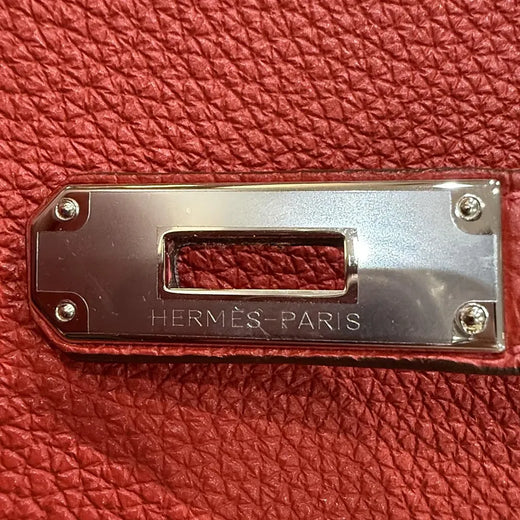
- Minutes 2–4: identifiers. Find the date code, serial, heat stamp or blind stamp and check that its format fits the era. Our free tools decode the formats: the LV date code checker, Chanel serial number checker, Gucci serial number checker and Hermès blind stamp checker. From 2021 Louis Vuitton moved to an embedded chip. Louis Vuitton has not published a way for the public to read it, and a chip's presence proves nothing on its own. A serial number can also be real and still not belong to a bag the brand released. Voided serial numbers were part of Chanel's case against the reseller What Goes Around Comes Around, which we summarize in our guide to the five layers of evidence.
- Minutes 4–6: materials. Canvas and leather texture, weight, lining fabric and smell. A strong plastic smell on a bag sold as vintage is a reason to look harder.
- Minutes 6–8: construction. Stitch count and angle, edge paint, how the pattern meets the seams, and hardware weight and engraving depth. Metal color or finish alone is not a tell.
- Minutes 8–10: consistency. Does everything fit one model, one year and one factory? A correct date code on a bag with hardware from another period, or a lining that model never had, is where well-made fakes, including superfakes, usually give themselves away.
Close the screen with one of three outcomes and write it down. Clear to list means nothing in the screen raised a question. Send for authentication means something did, or the bag is valuable enough that you want a second pair of eyes. Return to source means the bag failed a check you are sure of. If you are unsure which one applies, choose the second.
Intake Checklist
One per bag. Print it, fill it in and keep it in the item file. Record the SKU, brand and model, where and when you bought it, and the price paid, then tick each line.
Tick each line as you check it. The boxes reset only if you clear this site's data.
Show answer
Send for authentication. If you are unsure which outcome applies, choose the second.
When to Pay for Authentication and When to Learn It
Paying per item and learning a brand solve different problems. A per-item authentication gives you an expert verdict and a document you can show a buyer. Learning gives you the judgment to screen bags before you spend money on them. Most resellers end up doing both, and the split depends on what you stock.
| Pay per item when | Learn the brand when |
|---|---|
| The brand is outside the ones you handle every week. | The same brand makes up a large share of your stock. |
| The bag is high-value, rare, vintage or exotic. | You buy in person, at estate sales or markets, where you can't wait for a result. |
| A buyer asks for a certificate, or a dispute needs one. | You want to turn down a bad bag before you pay for it. |
| Your intake screen ended in "send for authentication". | You are training staff who sort incoming stock. |
Run It With Your Own Numbers
Bags of one brand you send for authentication in a year × the current per-item fee on our pricing page = what checking that brand costs you today. Set that against the course for the same brand. Count only the bags you would really have sent.
A course doesn't replace a certificate. When a buyer wants documentation, it still comes from an authentication. Per-item fees add up across a year of stock, which is why resellers usually learn the brands they stock most and keep paying for the rest.
Show answer
An authentication result for that specific bag. A course doesn't replace a certificate.
Documenting the Sale
Documentation protects you twice. It answers a buyer's first question before they ask it, and it gives you a dated record if the bag comes back. Build one file per item, starting at intake.
- Intake photos. All sides, the base, corners and handles, the interior, and every stamp, code and engraving, in good daylight.
- Unique marks. Scuffs, wear patterns, repairs, a pulled thread. These let you confirm that a returned bag is the bag you sent.
- Source records. The seller's listing, your messages and the payment receipt.
- The authentication result. LegitGrails authentications are reviewed by up to 4 brand experts, with results from 30 minutes, and authentic and counterfeit results include a secure digital certificate. Add the certificate to your listing where the platform's listing rules allow it. We explain what a certificate should contain in why used designer bags need authenticity certification.
- Packing record. A photo or short video of the bag going into the box, with the shipping label visible.

Resellers on forums describe both directions: a buyer claims a bag is fake and returns a different one, or a bag that passed one check fails another a month later. A complete item file shows which bag left your hands, and in what state.
Documents support a verdict; they don't make one. A certificate shows what experts concluded from the evidence in front of them. Your photos show that the bag the buyer received is the bag that was checked.
Listing a Bag This Week?
Get the certificate before the listing goes live
verifiedAuthenticate an ItemWhen a Platform Rejects an Authentic Item
Resale platforms check items in one of three ways: before listing, between payment and delivery on qualifying orders, or by reviewing the listing's photos. Know which applies to your listing and read the platform's current policy pages. For a side-by-side view, see how the major resale platforms authenticate.
A rejection of a bag you believe is authentic happens to careful sellers too. Authentication is expert opinion, and rare, vintage or repaired bags are where careful experts most often disagree. Sometimes the issue is condition, or a detail that doesn't match the listing. Work through it step by step.
- Read the notice closely. Note which item it concerns, the reason given, whether it is about authenticity or condition, and every deadline. If the order was a bundle, check what happens to the other items.
- Keep it calm and keep it on the platform. Use the platform's own messages and support. Don't relist the bag or ship anything else until you know the next step.
- Open your item file and confirm it is your bag. When it comes back, match the unique marks you recorded at intake.
- Get an independent opinion. Have the bag authenticated by a service that wasn't involved in the first decision, and ask for a written result.
- Appeal once, with evidence. Use the platform's support or appeal route. Attach the certificate and your photos, state the facts and keep it short. Each platform decides under its own policy, and some decisions are final.
- Decide what happens to the bag. If the decision stands, you can return it to your source inside their window, sell it through another channel with the independent result disclosed, or keep it. Read the platform's rules before you list it there again.
Afterward, look at what started it. Listing photos that hid a detail, a description that overstated condition, or a model you don't know well are all things the next intake screen can catch.
Show answer
Read the notice closely. The reason and the deadlines decide what you do next.
To keep your eye sharp between bags, play Real or Fake, a daily set of five close-ups to call.
Building Skill Brand by Brand
Nobody authenticates every brand equally well, and good authenticators say so when a piece is outside what they know. Pick the one or two brands you stock most and go deep on those before you add another. If you are starting from zero, our study path sets out what to learn first.
LegitGrails Academy teaches Louis Vuitton, Chanel, Gucci and Hermès handbags in three levels. Rachel Allen teaches Chanel and Gucci, and Alessia Pasquariello teaches Louis Vuitton and Hermès. Each lesson follows the order an authenticator uses at the bench: green flags, red flags, a real and fake pair side by side, then an unmarked bag for you to call before the answer is shown.
- Foundational ($199, or Pay in 4 at $49.75). Branding and stamps, codes and labels, materials and the most popular models. The Chanel and Gucci courses include how to buy resale safely. Three lessons are free to preview.
- Advanced ($299). Hardware and engravings, stitching and construction in depth. The Louis Vuitton and Hermès courses also trace how fakes have evolved.
- Expert ($299). Exotic and rare materials on all four handbag brands, with dedicated modules on high-quality fakes and superfakes in the Louis Vuitton, Gucci and Hermès courses.
Each handbag course has 20 to 27 lessons and about an hour of video, with quizzes, a final exam and a certificate of completion. One-time payment, lifetime access. The certificate shows you passed the course. It is not a license, because no such license exists.
| Brand | Levels, in order | All three levels |
|---|---|---|
| Louis Vuitton |
Foundational Advanced Expert |
Bundle, $637.60 |
| Chanel |
Foundational Advanced Expert |
Bundle, $637.60 |
| Gucci |
Foundational Advanced Expert |
Bundle, $637.60 |
| Hermès |
Foundational Advanced Expert |
Bundle, $637.60 |
The complete brand bundle includes all three levels for $637.60, 20% off the $797 they cost separately. Prices in USD.
For watches, the Academy has one Rolex course, Rolex Watches: Foundational, taught by Yong Shen. It has 29 lessons and 1.5 hours of video, and 2 lessons are free to preview. It costs $299, or Pay in 4 at $74.75. Rolex has no Advanced or Expert level.
Training staff? Write to support@legitgrails.com with your team size and the houses you handle.
Learn the Brands You Stock Most
Louis Vuitton, Chanel, Gucci and Hermès handbags, three levels each, plus Rolex watches
schoolSee Every CourseThe whole workflow fits in one line: screen the seller, screen the bag, document everything, pay for authentication where it matters, and learn the brands you stock most. Resale businesses that need authentication at volume can also look at our business solutions, and if you are still choosing where to list, see the best places to sell designer bags.
Your scorecard
Try the checks in this guide, and your score shows here.
If Louis Vuitton is the brand you stock most, its Foundational course covers branding, made-in labels and heat stamps, canvas and stitching, with quizzes and a final exam. The first 3 lessons are free, then $199 or Pay in 4.
Start 3 free lessonsHave a Bag in Your Intake Pile?
Reviewed by up to 4 brand experts, with results from 30 minutes
verifiedAuthenticate an ItemFrequently Asked Questions
How do you authenticate luxury handbags as a reseller?
Screen the seller before you buy, then give every bag the same short intake screen: paperwork, identifiers, materials, construction and consistency. Close it with one of three outcomes: clear to list, send for authentication, or return to source. When you are unsure, send it for authentication. Learn the brands you stock most so you can turn down bad bags before you pay for them.
Is a receipt or dust bag proof that a designer bag is authentic?
No. Dust bags, boxes, cards and receipts are sold separately online and are the easiest part of a bag to copy. Check that their details agree with each other and with the bag, then give them little weight. Documents support a verdict; they don't make one.
Does a serial number or date code prove a designer bag is authentic?
No. A serial number or date code only tells you whether the format fits the brand and the era. Counterfeiters copy real codes, and a genuine number can sit on a bag the brand never released. Louis Vuitton has used an embedded chip instead of a date code since 2021, and a chip's presence proves nothing on its own. Materials, construction and consistency carry the verdict.
Should a reseller learn authentication or pay for each item?
Most resellers do both. Pay per item for brands you rarely handle, for high-value, rare or vintage bags, and whenever a buyer or a dispute needs a certificate. Learn the brands that make up a large share of your stock, especially if you buy in person where you can't wait for a result. A course doesn't replace a certificate.
What should I do if a platform says my authentic bag is fake?
Read the notice for the reason and the deadlines, and keep every message on the platform. When the bag comes back, match it to the unique marks in your intake photos. Get a written result from an independent service that wasn't involved, then appeal once with the certificate and your photos. Some platform decisions are final.
Do you need a license to authenticate designer bags you resell?
No such license exists. Resellers build skill through practice, mentoring and courses. A course certificate shows you passed that course; it is not a license. When a buyer wants documentation for a specific bag, it comes from an authentication of that bag.
What photos should I keep for every bag I resell?
Keep all sides, the base, corners, handles and interior, every stamp, code and engraving, and close-ups of unique marks such as scuffs or repairs. Add the seller's listing, your messages, the payment receipt, any authentication certificate and a photo of the bag going into the box with the label visible.