How to Authenticate a Designer Bag
To authenticate a designer bag, check five layers of evidence and make sure they agree: the paperwork and extras, the identifiers such as date codes and serial numbers, the materials, the construction, and whether every detail fits one model, one year and one factory. No single sign decides it. A correct code or a genuine receipt can sit on a fake, so a verdict comes only when every layer points the same way.
Ask professional authenticators how they know a designer bag is real and they all give the same answer: no single detail decides it. A heat stamp, a serial sticker or a store receipt can each look right on a bag that is wrong. What professionals do instead is collect evidence in layers and check that every layer tells the same story.
This guide walks through those five layers in the order we use them: what each can tell you, what it can't, and where buyers go wrong.
Why One Sign Is Never Enough
Counterfeits used to be easy to catch. The logo was off and the canvas felt like plastic. The best copies made today are different. Factories study genuine bags closely, source similar leathers and hardware, and copy real serial numbers from listings they find online. Some of them are good enough to earn their own name, and we explain how today's superfakes are made and caught in a separate guide.
That changes how you should look at any one detail. A correct-looking date code proves the counterfeiter copied a correct date code. A receipt proves someone had a receipt. Each sign on its own can be faked, borrowed or moved from a genuine bag. The useful question is whether all the evidence agrees.
Professionals sort the evidence into five layers, from the weakest to the strongest:
| Layer | What it covers | Can it decide alone? |
|---|---|---|
| 1. Paperwork and extras | Receipts, cards, tags, box and dust bag | No |
| 2. Identifiers | Date codes, serial numbers, blind stamps, chips and scannable tags | No |
| 3. Materials | Canvas, leather, lining and smell | No |
| 4. Construction | Stitching, edges, hardware, zippers, logos and fonts | No |
| 5. Consistency | Whether everything above belongs to one model, one year and one factory | Only with layers 1 to 4 |
No layer gets skipped, and no layer decides on its own. A verdict comes when every layer points the same way.
Show answer
Only that a code and a receipt exist. No single layer decides a verdict on its own.
Layer 1: Paperwork and Extras

This layer covers everything that comes with the bag: box, tissue, dust bag, hang tags, care booklets, authenticity cards and the receipt.
What it can tell you. Extras help date and place a bag. Packaging designs change over the years, so a box or dust bag can suggest an era. A receipt can show the store, the country and the date of sale. On older Chanel bags, the number printed on the authenticity card should match the serial sticker inside the bag.
What to check. Look at print quality first. Genuine cards and tags carry sharp, evenly printed text and logos. Smudged ink, uneven spacing or a font that wanders is a reason to look harder. Check the dust bag's fabric, stitching and logo, and read every word on it, since misspellings still turn up. A receipt should name a real store, with a model, price and date that make sense together.
Why it ranks lowest. Extras travel. Cards, dust bags, boxes and even receipts are sold on their own online, and a genuine set can be moved from a real bag to a fake one. The opposite is common too: plenty of genuine pre-owned bags lost their box and card years ago. A missing receipt is not a red flag, and a full set is not proof. Documents support a verdict; they don't make one.
Layer 2: Identifiers

Most houses mark their bags with a code. Before you read one, know where it should sit on your model. A code in the wrong place tells you as much as the characters themselves.
- Louis Vuitton used date codes from the early 1980s until 2021. Two letters name the factory country and four digits give the date. From 2007, the first and third digits are the week and the second and fourth are the year, so "AH2192" means made in France in the 29th week of 2012. From 2021, Louis Vuitton replaced date codes with an embedded chip, so most bags made since then have no date code. You can read an LV date code with our free checker.
- Chanel placed a numbered serial sticker inside its bags, and the series points to a production period. You can decode a Chanel serial. From around 2021, Chanel replaced the sticker and card with a small metal plate inside the bag that shows the serial number and holds an embedded microchip. Chanel has not published a way for the public to read the chip.
- Gucci stamps a leather tag inside with a style number and a supplier code. Those numbers point to a model, not a year. You can check Gucci style and serial numbers, then work through the rest of the bag with our Gucci bag guide.
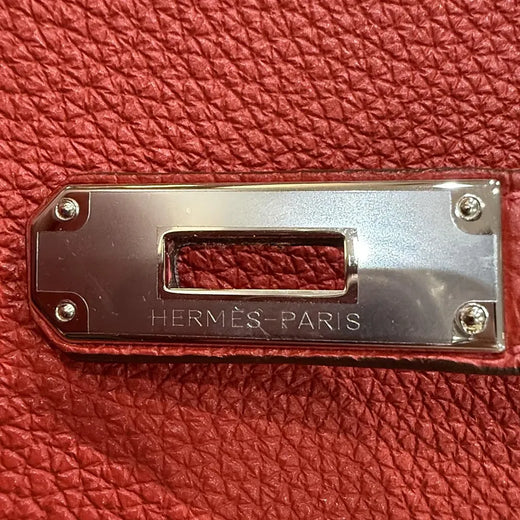
- Hermès uses a blind stamp: a year letter, in some eras inside a shape, plus marks for the workshop and the artisan. You can date a Hermès blind stamp, and our Hermès Birkin authentication guide shows the stamp beside a fake one.
What to check. Look at the format and the execution together. A genuine code follows the house's format for its era, with even spacing and a clean, consistent stamp or print. Irregular spacing, shallow or blurred stamping, the wrong font or a format that never existed are all reasons to look harder. A missing code is not proof either way. Some vintage pieces were never coded, and tabs and stickers wear away with use.
Chips. Louis Vuitton bags made since 2021 carry an embedded chip. Louis Vuitton has not published a way for the public to read it, so a phone scan won't confirm a bag. A chip's presence proves nothing on its own: counterfeit Louis Vuitton bags seized in China in 2020 already carried NFC chips that opened the Louis Vuitton website when scanned.
Why identifiers aren't proof. A code tells you what the bag claims to be. It does not tell you whether the claim is true. Counterfeiters copy real codes from genuine listings. A serial number that exists in a brand's records doesn't prove the bag is one the brand released. In Chanel v. What Goes Around Comes Around, a federal jury in New York found in February 2024 that the reseller was liable for selling Chanel-branded handbags whose serial numbers Chanel had voided, including numbers taken in a 2012 theft from a supplier's factory, and awarded Chanel $4 million in statutory damages. WGACA, which disputed that the bags were counterfeit, appealed, and in November 2026 the federal appeals court upheld the $4 million award. A code narrows things down. Layers 3 to 5 have to agree with it.
Show answer
Nothing on its own. Louis Vuitton replaced date codes with an embedded chip from 2021, so a missing code is not proof either way.
How We Teach This
Most of these layers have a module of their own in our Foundational courses, taught with green flags, red flags, a real-vs-fake pair and an unmarked bag to test yourself on.
schoolSee What Each Level CoversLayer 3: Materials
Materials are hard to judge from photos and much easier in hand. Lighting, filters and compression hide texture, so if you are buying online, ask for daylight close-ups without a filter.
Canvas. Coated canvas should feel firm and slightly textured, and it should crease the way the genuine model creases. Check how the pattern meets at the seams. On monogram canvas, the motifs are placed deliberately, and the alignment at seams and edges follows the house's pattern for that model. On some models made from one continuous piece of canvas, such as the Speedy and the Keepall, the pattern runs upside down on one side, and that is correct. Our Louis Vuitton bag guide starts with the canvas print and works through the rest of the bag.
Leather. Each house uses named leathers with a known grain, such as Chanel's caviar and lambskin or Hermès's Togo and Epsom. Compare the grain pattern, its depth and how regular it is against a genuine reference of the same leather. Real grain varies a little across a hide. A grain that repeats perfectly, or one that looks pressed into a flat surface, is worth a second look. Suede should feel soft and even. Exotic skins show natural variation in scale size and pattern, and a print that repeats too neatly is a warning sign.
Lining. Check the lining material, color and attachment against the model and era. Bubbling, glue marks or a fabric the model never used are worth noting.
Smell. A strong chemical, glue or plastic smell is a reason to look harder. Treat smell as a hint only, since bags pick up smoke, perfume and storage smells over the years.
A note on color. Color and finish alone don't tell you much. Houses release the same model in many shades, materials change with sunlight and age, and plated hardware wears differently from bag to bag. Use color only as part of the consistency check in Layer 5.
Spot the fake
Monogram canvas from two Keepalls. One is genuine. The other is a counterfeit sent to us for authentication.
What to compare
A is from a counterfeit Keepall sent to us for authentication. B is from a genuine Keepall.
- The grain of the coating. Compare its texture and depth with a genuine reference of the same canvas.
- The edges of the motif. Look at how cleanly the print sits on the grain.
- Print color. Compare it, then weigh it in the Layer 5 consistency check. Color alone doesn't tell you much, because canvas changes with sunlight and age.

Layer 4: Construction

Construction is where a factory's habits show. Houses build each model the same way, run after run, and copying that takes time most counterfeiters skip.
Stitching. Count the stitches where the house uses a set number, such as across a tab or along a handle attachment, and compare with a genuine reference. Look at the angle: many houses use a slanted stitch in specific places, and a straight stitch there is a warning sign. Stitches should be even in length and tension. Thread color should match or complement the bag in the way the house does it for that model. On a used bag, judge wear separately from workmanship. One uneven stitch is not a verdict, so look for a pattern.
Edges. Edge paint on genuine bags is smooth, even and the right color for the model. Paint that is thick, rubbery, cracked across new edges or spilling onto the leather points to rushed work.
Hardware. Pick it up. Genuine hardware usually has a solid weight, and lightweight, hollow-feeling pieces deserve a closer look. Engravings should be crisp and evenly deep, with the right font and spacing. Shallow, blurred or uneven engraving is common on copies. Screws, rivets and turn-locks are specific to each house and era too.
Zippers. A good zipper glides without snagging. Check the maker's mark on the slider and the pull, and confirm it matches what the house used on that model in that period. The same zipper brand can be right on one bag and wrong on another. Engraved pulls should be clean and sharp.
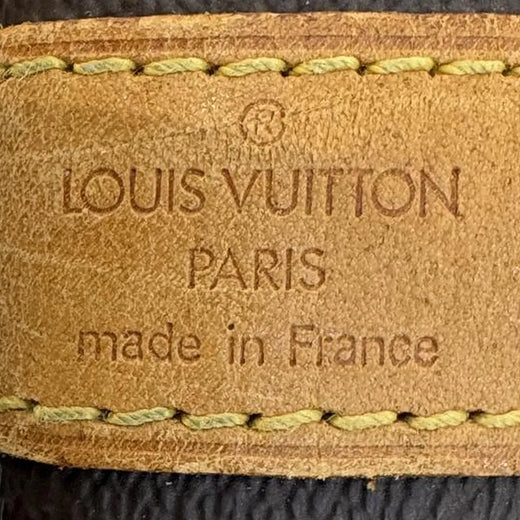
Logos and fonts. Counterfeiters often struggle with lettering. Check the shape of each letter, the spacing between letters and the size of the logo against the bag. Heat stamps should be crisp and evenly pressed. Logos should be symmetrical and placed where the house places them on that model. Small font differences are among the most reliable details at this layer.
Spot the fake
Two Louis Vuitton heat stamps. One is from a genuine Keepall. The other is from a counterfeit sent to us for authentication.
What to compare
A is from a genuine Keepall. B is from a counterfeit Keepall sent to us for authentication.
- Letter shapes. Check each letter against a genuine reference of the same era.
- Spacing. Look at the space between letters and between the lines.
- Pressing. A heat stamp should be crisp and evenly pressed.
- Leather color. Leave it out. Vachetta darkens with light and handling, so color alone is not a tell.

Want more practice? Play Real or Fake, a daily set of five close-ups to call.
Layer 5: Consistency


Each detail from layers 1 to 4 might pass on its own. The question here is whether they all belong together: one model, one year, one factory.
Some examples of what a professional checks at this stage:
- The date code says the bag was made in a particular year, but the heat stamp font, the lining or the zipper belongs to a different period.
- The serial series points to one era, but that model, size or color was only released later.
- The Hermès year letter doesn't fit the leather or hardware offered for that model that year.
- The wear doesn't fit the age. A bag described as ten years old with untouched handles and worn corners, or with untreated leather that has not darkened at all, raises questions.
This is where superfakes slip up. They are built by copying many genuine references, and those references don't always come from the same year. The result can pass a detail-by-detail check and still mix features that never appeared together. We go deeper into where even the best copies give themselves away in our superfake guide.
Build a reference library. Consistency checks only work if you know what genuine looks like. Start with the brand's website and authorized retailers for current models. For older bags, use clear photos of authenticated examples of the same model, size and year. Our free model-by-model guides are a good starting point. Save close-ups of every bag you have confirmed, organized by model and year. Owner reviews and enthusiast forums such as PurseForum can add close-up photos you won't find elsewhere.
Be careful with listing photos. Sellers sometimes reuse photos of a genuine bag. If you are buying online, ask for new photos of specific details, such as the code, the heat stamp and the inside of the zipper pull, taken in daylight.
When every layer agrees, you have a verdict. When one layer contradicts the others, professionals ask for more photos before they decide.
Show answer
Ask for more photos before you decide. When one layer contradicts the others, there is no verdict yet.
Learn It or Have It Checked?
The five layers take practice. The right route depends on how often you buy.
Buying one bag. If you are buying a single bag, the fastest way to an answer is to have it checked. At LegitGrails, each item is reviewed by up to 4 brand experts, and results come from 30 minutes. Authentic and counterfeit results include a secure digital certificate.
Get a Professional Opinion Before You Pay
Each item is reviewed by up to 4 brand experts, with results from 30 minutes
verifiedAuthenticate an ItemBuying or reselling often. If you buy, sell or consign designer bags regularly, it pays to learn the method yourself. Our video courses for Louis Vuitton, Chanel, Gucci and Hermès handbags teach each layer with real-and-fake pairs, quizzes and a final exam. Each Foundational handbag course starts with 3 free lessons. For watches, Rolex Watches: Foundational has 2 free lessons.
Learn the Layers for the Houses You Deal In
Video courses for Louis Vuitton, Chanel, Gucci and Hermès handbags, plus Rolex watches, with free lessons to start
schoolCompare the CoursesStart with the house you buy most
Each Foundational handbag course covers the first layers for one house: $199 USD, about 1 hour of video, and 3 free lessons to start.
| House | Instructor | Foundational modules include | Course |
|---|---|---|---|
| Louis Vuitton | Alessia Pasquariello | Made in labels and hot stamps · Canvas and textiles · Stitching fundamentals | Start free lessons |
| Chanel | Rachel Allen | Serial numbers and age verification · CC branding and stitching · Collateral and packaging | Start free lessons |
| Gucci | Rachel Allen | Style numbers and serial codes · Materials and textiles · Hardware | Start free lessons |
| Hermès | Alessia Pasquariello | Date stamps and serial codes · Leathers and materials · Handbag construction | Start free lessons |
To compare every course and level side by side, see LegitGrails Academy.
If you resell, our guide on how resellers vet pre-loved stock bought online covers the buying side in more detail. If you are thinking about authentication as a career, see what authenticator job ads actually ask for.
Your scorecard
Try the checks in this guide, and your score shows here.
The Louis Vuitton Foundational course teaches the first layers for one house with real-vs-fake pairs, quizzes and a final exam. The first 3 lessons are free.
Start 3 free lessonsFrequently Asked Questions
Is there a free way to authenticate designer bags?
You can do a lot of the work for free. Our free serial and date code checkers read identifiers for Louis Vuitton, Chanel, Gucci, Hermès and other houses, and our free guides walk through specific models, such as the Louis Vuitton Félicie Pochette, the Chanel Coco Handle and the Gucci Diana. Free tools narrow things down, but they can't weigh all five layers together. For a verdict before you buy, use a professional service.
How much does it cost to have a bag authenticated?
The price depends on the brand and on how fast you want the result. You can see the current price for your bag when you choose your brand. If you authenticate often, you can top up credits in advance. Larger top-ups add bonus credits, which lowers the cost per item. See account pricing for the current rates.
How does professional authentication work?
You upload photos of the bag, following a list of the angles and details needed for that brand. Each item is reviewed by up to 4 brand experts, who work through the same layers described in this guide: extras, identifiers, materials, construction and consistency. Results come from 30 minutes. Authentic and counterfeit results include a secure digital certificate. If a photo is unclear or a detail is missing, the experts ask for another photo.
Do all designer bags have a serial number or date code?
No. Some vintage pieces were never coded, and date code tabs and serial stickers wear away with use. Louis Vuitton replaced date codes with an embedded chip from 2021, so most Louis Vuitton bags made since then have no date code to read. A missing code is not proof either way. It means the other four layers carry more of the weight.
Does an authenticity card or receipt prove a bag is real?
No. Cards, dust bags, boxes and receipts are sold on their own, and a genuine set can travel with a fake bag. They still help: a receipt can show the store and date of sale, and on older Chanel bags the number on the card should match the serial sticker inside. Documents support a verdict; they don't make one.
Is there an app that can tell if a bag is real?
No phone scan confirms a designer bag on its own. Louis Vuitton has not published a way for the public to read the chip in its bags made since 2021, a chip's presence proves nothing by itself, and counterfeits have been found with working chips. Apps and websites can help you read a code or send photos to experts, but a verdict still comes from people checking all five layers.