How to Spot a Superfake Bag
A superfake is a counterfeit made to pass inspection, so no single detail exposes it. Authenticators check whether every part tells the same story: how the materials have aged, how the bag is built where it carries load, the weight and engraving of the hardware, and whether the stamps, hardware and construction all fit one model and one year. Serial stickers, cards, receipts and chips support a verdict but never make one.
A superfake is a counterfeit built to survive inspection. The leather looks right, the stamps are crisp, and the bag often arrives with a box, a dust bag and a receipt. So the question buyers ask in every forum is a fair one: is there still a way to detect super fakes?
There is, and it rarely comes down to one detail. Superfakes are made to pass a checklist. They copy the points that guides and videos teach people to look at. Authenticators ask a different question: does every part of this bag tell the same story?
This article explains where superfake bags still go wrong, why genuine parts turn up on fake bags, and when the honest answer is "we can't verify this." Then we show two Hermès bags sent to us for authentication, and you can try to pick the real one.
What People Mean by "Superfake"
"Superfake," "super fake" and "high-quality fake" all describe the same thing: a counterfeit made to close the gap with the genuine bag in materials, construction and branding. The word covers the top end of the counterfeit market, where copies can cost hundreds or even a few thousand dollars.
Replica sellers grade their own goods with a separate vocabulary. You will see these terms in listings and forums, so it helps to know what they claim:
- 1:1 claims a one-to-one copy of the original, detail for detail.
- Mirror claims the copy matches the original down to the stamps, hardware and packaging.
- Top tier or boutique level make the same claim with more confidence.
- Rep is short for replica and covers everything from cheap copies to the most expensive superfakes.
These are sales terms. They describe what a seller promises, and they say nothing reliable about the bag in your hands. A "dupe" is a different thing: it borrows a design without copying the logo, so it isn't trying to pass as the brand. A superfake is still a counterfeit, whatever it cost and however it was graded.
Show answer
Only what the seller promises. Grading terms are sales claims, and a superfake is still a counterfeit.
Why Fakes Got Better
A decade ago, most fakes failed on the obvious things: wrong fonts, thin canvas, hardware that looked and felt cheap. Those mistakes are rarer at the top of the market now. Three things changed.
- Reference material is everywhere. High-resolution photos, unboxing videos and detailed authentication guides are public. Every point a guide teaches buyers to check is visible to the people making copies too.
- Materials and finishing improved. The best copies use real leather, heavier hardware and careful hand finishing in the places buyers look first.
- The extras got better. Boxes, dust bags, cards, receipts and tags are produced with the same care as the bag, because buyers check them first.
The result is a fake that passes a quick look and often passes a simple checklist. Some posts in replica communities argue that this makes authentication impossible, because authenticators only check the stamp, the font, the lock and the stitching. They have a point about checklists. A list of ten features can be learned and copied.
What is much harder to copy is consistency: a bag where the leather, stitching, hardware, stamps and packaging all belong to the same model, the same year and the same workshop. That is what professionals look for. We keep this section general on purpose, because a detailed history of how fakes improved is also a to-do list for the people making them. Our instructors cover it brand by brand in the Evolution of Fakes lessons of the Louis Vuitton Advanced and Hermès Advanced courses.
Where Superfakes Still Fail
Superfakes improve fastest on what photographs well. They lag on what only shows with time, use and handling. These are the four areas where we see them go wrong most often.
How Materials Age
Genuine leather and coated canvas age in known ways. Louis Vuitton's vachetta trim darkens toward honey with light and handling. Hermès Togo softens, and its grain relaxes at the corners and along the handles. A fake can look right when new and age wrong: the coating cracks where it should crease, the leather darkens in patches, or the edges lift and peel. On a pre-owned bag, wear that doesn't fit the material is a strong signal. So is a bag sold as fifteen years old that shows no age at all.
Construction at Stress Points
Copies are built to look right where people look. Authenticators also look where the bag carries load: where the handles meet the body, the corners of a flap, the base, the ends of a zipper. Stitch tension, the angle of each stitch, how the thread turns a corner and how the edge paint is laid all show whether the maker worked to the house's method or worked from photos. These areas are hard to fake well and easy to overlook in a listing, so ask for close-ups of them before you buy.
Hardware Weight and Engraving
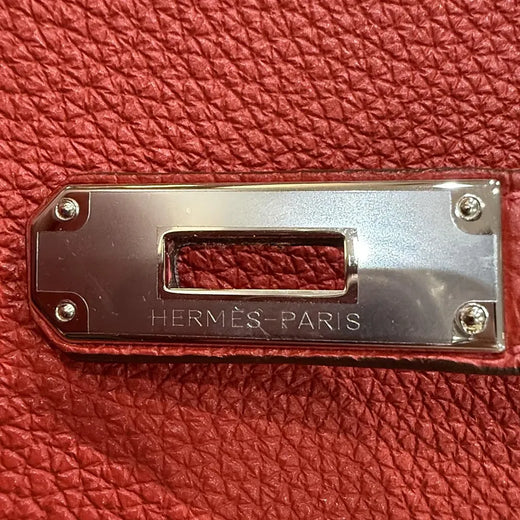
Good hardware is expensive to copy. A genuine lock, turn-lock or zipper pull has a weight and a firmness of movement that many copies miss. Engraving is the second test: the depth, the letterforms and the spacing should be crisp and match the bag's era. Color or shine on its own tells you very little. Plating differs by year and by finish, and wear changes it further, so we never judge hardware on color alone.
Mixed-Era Details
Mixed-era details are where superfakes most often slip up. A counterfeiter copies the best reference photos they can find, and those photos come from different years. The result can be a bag with a date stamp from one year, a heat-stamp font from another and hardware from a third. Each detail looks perfect on its own. Together, they describe a bag the house never made.
Checking that everything fits one model, one year and one place of manufacture is the final layer in how professional authenticators check a designer bag. It is also the layer a checklist can't capture, because the right answer changes with every model and year. If you want to build that knowledge in order, see what each course level covers.
Show answer
Mixed-era details. Each one can look right alone, and together they don't fit one model and one year.
Genuine Parts on Fake Bags
Some fakes carry real parts. This is one of the main reasons a single detail can never prove a bag is genuine.
- Serial stickers and cards. A genuine serial sticker can be removed from one bag and placed in another, and genuine authenticity cards circulate on their own. A serial number can also be real and still not belong to a bag the brand released. Voided serial numbers were part of Chanel's case against the reseller What Goes Around Comes Around, which we summarize in our guide to the five layers of evidence.
- Receipts, boxes and dust bags. Packaging is sold separately from bags, and replica sellers supply their own. A receipt shows that a receipt exists.
- Chips. Louis Vuitton has embedded a chip in its bags since 2021, the public has no way to read it, and fakes fitted with NFC chips were seized in 2020, so a chip's presence proves nothing on its own.
Documents support a verdict; they don't make one. Treat every extra as supporting evidence, and judge the bag itself.
Show answer
Nothing on its own. Documents support a verdict. They don't make one.
When Even Experts Say "Not Sure"
Sometimes the honest answer is that a bag can't be verified. At LegitGrails, "Unable to verify" is a real outcome. We use it when the evidence doesn't support a clear authentic or counterfeit result. The usual reasons:
- The photos miss the areas that matter, or they are blurred, filtered or too dark.
- The bag has been repaired, refurbished or recolored, or a part has been replaced, so original and non-original details sit side by side.
- The model is rare, a special order or an exotic, and reference material is thin.
- The details conflict, and more evidence is needed to settle which way they point.
In those cases we first ask for more photos. If that still doesn't settle it, we say so. A forced answer on thin evidence helps nobody, and with superfakes it is exactly how mistakes happen. An in-person check adds what photos can't show: weight, smell and the feel of the leather.
Case Study: Which Hermès Bag Is Real?
Here are two Hermès bags sent to us for authentication in autumn 2026. Look at them the way a buyer would look at a listing, then pick the one you think is genuine.
Test yourself
Tap the bag you think is real, or pick Both or Neither.
Reveal the answer
Neither. Both bags are counterfeit.
Our team flagged both bags as counterfeit at the first review. Neither shows an obvious flaw in a full-bag photo, which is the point of a superfake. On Bag B, the detail our authenticators flagged at every review was the blind stamp. The close-ups below show where to look on each bag.
The Close-Ups
| Detail | Bag A | Bag B |
|---|---|---|
| Stitching |
 Look at the slant of each stitch and how evenly the stitches are spaced along the tab. |
 Black thread on black leather is hard to read in a phone photo. Look at the stitch line where the handle meets its ring. |
| Blind stamp |
 Look at how deep each character is pressed and whether the characters sit on one line. |
 The blind stamp is what our authenticators flagged at every review. Compare the depth and spacing of its characters with a genuine stamp. |
| Hardware engraving |
 The plate is still under its protective film. Look at the letterforms and how evenly the engraving is cut. |
 Look at the depth of the engraving and the spacing between the letters, not the color of the metal. |
| Leather grain |
 Look at the size and shape of the grain and whether it varies across the panel. |
 Look at how the grain is pressed across the flap. Some Hermès leathers, like Epsom, are embossed, so a regular pattern is expected there. |
| Interior |
 Look at the engraving on the zip pull and the stitch line along the pocket. |
Not photographed by the owner. |
| Edges |
 Look at the edge paint along the handle and side tab. It should be thin, smooth and even. |
 Look at the edge paint along the side panel and the corner. |
What to Look For in Each Close-Up
- Stitching. Birkin and Kelly seams are saddle-stitched by hand, so each stitch sits at a slight, even slant and the thread is pulled tight. Judge tension and angle at the handle bases and corners, where they are hardest to keep even.
- Blind stamp. The stamp carries a year letter and a craftsman mark. Its letter, frame and placement have to fit the year the rest of the bag points to. You can date a Hermès blind stamp with our free checker.
- Hardware engraving. Look at engraving depth, letter spacing and how cleanly each letter ends. On a lock, the number on the lock and on its key should match. Never judge hardware on its color or shine alone.
- Leather grain. Togo and Clémence have a natural, irregular grain that varies across a panel, so a grain that repeats like a pattern is a concern. Epsom is different: its grain is embossed by design, and a regular pattern is expected there.
- Interior. The inside heat stamp's font, spacing and depth should match the exterior stamp and the year. The pocket's construction and the zip pull should belong to the same era as everything else.
- Edges. Genuine edges are finished in thin layers and look smooth and even along their length. Thick, rubbery or bubbling edge paint is a common flag on copies.
What the two bags had in common. Both looked right in a full photo, and neither gave itself away in one obvious place. Bag B went through several rounds of extra photos and a review by a senior authenticator before the verdict was final. That is why a close look at the stamp, the hardware and the stitching matters more than how the whole bag looks.
To practice, here is Bag A next to a genuine Birkin in two of the areas from the close-ups.

Practice
One turn-lock plate is from a genuine Birkin. The other is from Bag A.
What to compare
Plate 1 is from a genuine Birkin. Plate 2 is Bag A, a counterfeit sent to us for authentication.
- Letter shapes. Compare each letter of HERMES-PARIS.
- Depth. Look at how deep the engraving is cut and how cleanly each letter ends.
- The frame around the slot. Compare its shape and finish.
- Metal color. Leave it out. Plating differs by year and finish, so color alone tells you very little.

Want more practice? Play Real or Fake, a daily set of five close-ups to call.
This is how we read every Hermès bag: no single detail decides it, and the verdict comes from the details agreeing or disagreeing. For more on the house's own details, start with our Hermès Birkin authentication guide.
Learn the method behind this case study
Alessia Pasquariello teaches it in Super Fake Detection, a module of the Hermès Expert course: 25 lessons, about 1 hour of video, quizzes and a final exam. $299, or 4 payments of $74.75. Or get all three Hermès levels for $637.60.
schoolSee the Hermès Expert CourseBrand Notes: Louis Vuitton, Gucci, Chanel
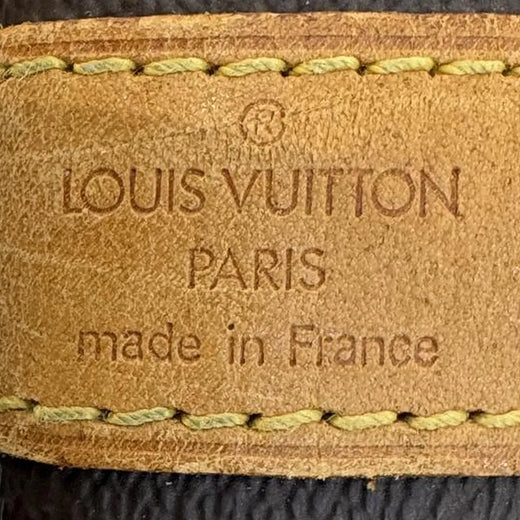
Louis Vuitton. Superfakes of LV are often caught on how canvas and vachetta age, and on a date code or construction detail that doesn't fit the bag's era. Our guide to real vs. fake Louis Vuitton bags covers the details.
Gucci. High-quality Gucci fakes tend to get the logo right and the serial tag, materials and construction wrong together, and a scannable code alone doesn't prove a bag is real. See how to authenticate your Gucci bag.
Chanel. Chanel superfakes are often caught on quilting alignment, stitch density and CC turn-lock details, and a genuine-looking serial sticker, whether copied, moved or stolen, is a known risk. Start with how to spot a fake Chanel bag.
Learn to See It Yourself
Spotting a superfake is the last step of a long path. It rests on knowing the house first: its branding, materials and identifiers, then its construction and how its fakes have changed. Our courses follow that order. The Foundational level covers the basics, the Advanced level covers construction and the Evolution of Fakes, and the Expert level takes on the hardest cases. If you're starting from zero, read our study path from first bag to expert, or compare the three levels for each house.
| Expert course | Superfake module | Enroll |
|---|---|---|
|
Louis Vuitton Expert 24 lessons · about 1 hour of video · $299 |
Super Fakes, the first module, taught by Alessia Pasquariello. Its video lesson is open as a free preview. |
Watch the free lesson All three levels, $637.60 |
|
Hermès Expert 25 lessons · about 1 hour of video · $299 |
Super Fake Detection, taught by Alessia Pasquariello, alongside exotics, special orders and common myths. |
See the course All three levels, $637.60 |
|
Gucci Expert 20 lessons · about 1 hour of video · $299 |
High-Quality Fakes, taught by Rachel Allen, with Data Matrix codes, NFC tags and sales tags in the same course. |
See the course All three levels, $637.60 |
New to a house? The Expert level assumes the earlier two. The LV Advanced and Hermès Advanced courses include the Evolution of Fakes lessons. Prices in USD, one-time payment, lifetime access.
Watch a superfake lesson for free
The Super Fakes video lesson from Louis Vuitton Expert is open as a free preview.
schoolWatch the Free LessonNot sure about a bag you own?
Each item is reviewed by up to 4 brand experts, with results from 30 minutes. Authentic and counterfeit results include a secure digital certificate.
verifiedAuthenticate an ItemYour scorecard
Try the checks in this guide, and your score shows here.
Spotting a superfake starts with knowing the house. Hermès Foundational covers its heat stamps, leathers, construction and date stamps, with quizzes and a final exam. The first 3 lessons are free.
Start 3 free lessonsFrequently Asked Questions
What does "super fake" mean?
A super fake, or superfake, is a counterfeit made to close the gap with the genuine item in materials, construction and branding. It is built to pass a quick look and often a simple checklist. Sellers grade them with terms like 1:1, mirror or top tier, but those are sales claims, and a superfake is still a counterfeit.
Is there a way to detect super fakes?
Yes. Superfakes copy the details that guides teach people to check, so no single detail settles it. Authenticators test whether everything agrees: how the materials have aged, construction at stress points, hardware weight and engraving, and whether stamps, hardware and construction all fit one model and one year. Mixed-era details are where superfakes most often slip.
Can a superfake bag pass authentication?
A superfake can pass a quick look or a checklist, which is what it is built for. A professional check reads the whole bag against the model and year it claims to be. When the photos or the bag itself don't give enough evidence for a clear result, the honest outcome is "Unable to verify" rather than a forced verdict.
Can a fake bag have a real serial number or receipt?
Yes. A genuine serial sticker can be moved from one bag to another, genuine authenticity cards circulate on their own, and boxes, dust bags and receipts are sold separately or supplied by replica sellers. Documents support a verdict; they don't make one. Judge the bag itself.
Does a chip prove a Louis Vuitton bag is real?
No. Louis Vuitton has embedded a chip in its bags since 2021, but the public can't read it in any meaningful way. A phone that detects a chip has only shown that a chip is there, and fakes can carry chips too. A chip's presence proves nothing on its own.
What is the difference between a superfake and a dupe?
A dupe borrows a design without copying the brand's logo or name, so it isn't trying to pass as the brand. A superfake copies the branding and is made to pass as genuine, which makes it a counterfeit whatever it cost and however the seller graded it.
How can I tell if my bag is original or fake?
Check that every part tells the same story: materials and how they have aged, stitching where the bag carries load, hardware weight and engraving, and stamps that fit the bag's model and year. Use our brand guides for the details. If you are still unsure, have it reviewed by experts before you buy, sell or rely on it.