How to Tell If Louis Vuitton Pochette Metis Is Real
Roughly 37% of Pochette Metis bags submitted to LegitGrails fail authentication, close to 1.7× the brand-wide LV fail rate (based on internal lab data across thousands of submissions, 2022 to 2025). To authenticate one yourself in 2026, examine the S-lock clasp for 0.3 to 0.4 mm "LV" engraving depth with sharp serifs, verify the interior heat stamp matches production year, and check the canvas grain angle (~60° on post-2012 production, ~110° on some March 2024+ batches). The nine checkpoints below are what a written guide can transfer. Professional authenticators read dozens of finer signals across hardware finish, stitch tension, and stamp depth, the kind that take years of side-by-side reference work to read fluently from a photo.
The Louis Vuitton Pochette Metis (officially named Pochette Métis with the accent on é, first released in 2012) retails at $2,760 USD in the United States and €2,250 in France. That's why it's one of the most counterfeited bags in the luxury market. Louis Vuitton appears repeatedly in U.S. Customs and Border Protection enforcement releases as one of the most frequently seized counterfeit luxury brands.
| Checkpoint | What to Inspect | Reliability |
|---|---|---|
| S-Lock Clasp | "LV" engraving 0.3 to 0.4mm deep, single firm click, no wobble | ★★★★★ |
| Heat Stamp | Letters 0.2 to 0.3mm deep, not painted or foiled, uniform spacing | ★★★★★ |
| Date Code/RFID | Pre-2021: 2 letters + 4 digits. Post-2021: RFID chip only | ★★★★★ |
| Vachetta Logo Embossing | Even depth across "LOUIS VUITTON PARIS", smooth, uncracked leather | ★★★★ |
| Zipper Head | Sharp cast relief detail, teeth aligned, no casting seams | ★★★★ |
| Canvas Texture | Subtle grain, matte sheen, not glassy or plasticky | ★★★★ |
| Hardware Engravings | Solid brass, gold-tone plating, even letter depth on every piece | ★★★★ |
| Adjustable Shoulder Strap | Centered LV print, square buckle with rounded corners, even edge paint | ★★★★ |
| Dust Bag | Warm pale-yellow cotton, brown drawstring, dense weave that blocks backlit print | ★★★ |
How the Reverse Monogram (M44876) Differs from Standard Monogram
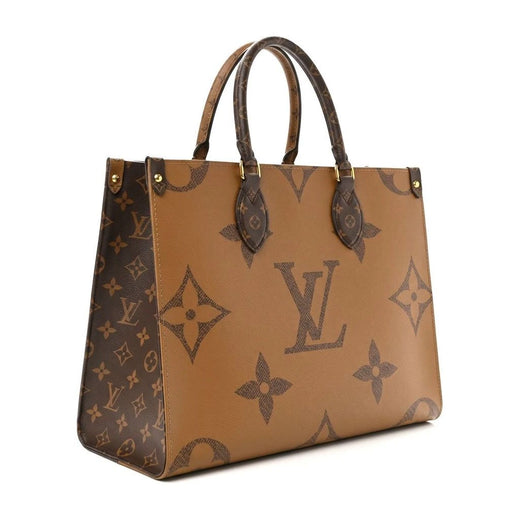
The Pochette Metis Reverse Monogram (style code M44876) inverts the classic Monogram canvas, the LV initials and quatrefoil flowers appear in dark brown on a tan base, the opposite of the standard M44875's tan-on-brown layout. Counterfeit Reverse Monogram bags consistently fail in the same places counterfeit standard Monograms do: shallow S-lock engraving, oversized ® on the heat stamp, and inconsistent kerning on the "LOUIS VUITTON PARIS" embossing. The hardware specs, RFID chip behavior, and leather tag location are identical to the standard variant.
Two Reverse-specific tells worth checking: the dark-brown LV monogram on the canvas should sit slightly recessed (same as the inverse on standard Monogram) with edges that feather softly into the tan base, never printed flat on top. And the trim vachetta on the Reverse follows the same patina rules as the standard, honey-pale at retail darkening to amber over years of UV exposure.
Pochette Metis Style References (Don't Confuse These)
Counterfeit listings routinely conflate Pochette Metis variants. The authentication techniques in this guide apply across every Pochette Metis model, but our primary coverage is the standard Monogram (style code M44875) and the Monogram Reverse (M44876), the two most counterfeited variants. Sister SKUs use different materials or proportions:
| Style Code | Variant |
|---|---|
| M44875 | Pochette Metis Monogram (covered in this guide) |
| M44876 | Pochette Metis Monogram Reverse (covered in this guide) |
| M46279 | Pochette Metis East West Monogram |
| M46595 | Pochette Metis East West Empreinte |
| M45773 | Pochette Metis Bicolor Empreinte |
Why Is the Pochette Metis So Heavily Counterfeited?
The Pochette Metis is among Louis Vuitton's most counterfeited bag models. At $2,760 retail and $1,600 to $2,200 on resale markets, it sits in a sweet spot, affordable enough for aspirational buyers, expensive enough for counterfeiters to profit. LegitGrails internal authentication data shows roughly 37% of submitted Pochette Metis bags fail authentication, close to 1.7× the brand-wide rate of ~22% across all LV bag submissions (sample drawn from 2022 to 2025).
Three factors drive counterfeiting. First, the compact crossbody design works for everyday use, not just special occasions. Second, the monogram canvas (also used in the LV Neverfull, Speedy, and Alma bags) is easier to replicate than exotic leathers. Third, high resale demand. Ready market. Easy money. For an overview of authentication signals that apply across every Monogram-canvas LV bag, not just the Pochette Metis, see our complete Louis Vuitton authentication methodology.
There's a deeper reason LV is uniquely difficult to authenticate. The brand has a long product history, many styles, constant new releases, and no obvious anti-counterfeit features built into the canvas itself. Even authentic pieces show workmanship variation between batches and factories, and that natural variation is exactly what gives high-tier superfakes cover. Authentication of Louis Vuitton is among the hardest brand challenges in the industry, which is why a deep reference set matters more here than for any other handbag house.
According to the OECD's 2025 "Mapping Global Trade in Fakes" report (based on 2021 customs data), counterfeit goods represented $467 billion in global trade, and Louis Vuitton remains one of the most targeted luxury brands worldwide. The International Trademark Association tracks counterfeit market scale and IP enforcement globally, with handbags consistently ranking among the most heavily counterfeited categories.
How to Verify the S-Lock Clasp Is Authentic

What to Look For
The pochette metis s-lock carries four authentication signals on one piece of hardware. Start with the LV monogram on the top plate, strokes are sharp, the inner serifs of the "L" and "V" form clean right angles, and the engraving sits 0.3 to 0.4mm deep in solid brass, deep enough to catch a fingernail. Below the locking arm, "LOUIS VUITTON PARIS" is engraved with tight, consistent kerning and a tiny registered ® mark to the right that stays crisp even at close range. The four rivets are seated at identical heights with no tooling marks. Mechanically, the lock turns with a single firm click.
How Current Fakes Differ
Counterfeit S-locks fail across all four signals. The LV monogram on the top plate has thinner strokes with rounded inner corners. The ® symbol is oversized, pixelated, or missing entirely. Letter kerning in "LOUIS VUITTON" or "PARIS" drifts, with letters bunching or spreading inconsistently. Engraving depth varies between elements on the same lock, and rivets sit at uneven heights. Beyond the visual cues, fakes also feel wrong, the clasp turns with a loose, two-stage motion rather than a single firm click, but that's a tactile check, not something a photo will catch.
What Experienced Authenticators Check
From our lab's work, the authentic S-lock side teeth are polished smooth, and the rubber cap protrudes with a visible gap from the metal edge. On counterfeits, the side gear teeth are too wide, and the rubber cap appears deformed or flush with the metal. These are details our authenticators learn to read at a glance by working through thousands of authentic and counterfeit references over years. Hardware authentication patterns like these recur across many Louis Vuitton models, particularly bags with similar lock construction like the Speedy.
S-Lock Quick Comparison
| Element | Authentic | Counterfeit |
|---|---|---|
| LV monogram engraving | 0.3 to 0.4mm deep, sharp serifs, clean right-angle corners | Thinner strokes, rounded corners, depth varies between elements |
| ® registered mark | Tiny but crisp, stays defined at close range | Oversized, pixelated, or missing entirely |
| "LOUIS VUITTON PARIS" kerning | Tight, consistent letter spacing | Drift, letters bunch or spread inconsistently |
| Rivet seating | Identical heights, no tooling marks | Uneven heights, visible tooling marks |
| Lock mechanism | Single firm click, smooth single-stage motion | Loose, two-stage motion, sometimes wobbly |
The S-lock clasp remains the single most reliable authentication indicator on the Pochette Metis as of 2026. In side-by-side lab work, the most common superfake tell is shallow engraving depth (under 0.25 mm vs the authentic 0.3 to 0.4 mm), combined with letterforms that lose their sharp serif terminals under 10x magnification. But authentication never relies on a single check. We cross-reference 8 to 12 details against thousands of reference pieces on every bag we authenticate.
How to Check the Vachetta Logo Embossing

What to Look For
The front vachetta strap carries "LOUIS VUITTON PARIS" embossed directly into the natural leather. Authentic embossing sits with uniform depth across every letter, sharp serifs, and a perfectly straight baseline. The vachetta around the stamp should be smooth, taut, and free of cracks, with the warm honey patina consistent on either side of the lettering. Letter heights are identical, and the kerning between "LOUIS" "VUITTON" "PARIS" stays balanced across the full word block.
How Current Fakes Differ
The leather usually betrays the fake before the letters do. Counterfeit vachetta tends to be lower-grade, so the embossing process leaves visible creases, pinching, or surface cracking around the stamp. Pressure varies between letters, leaving some letters deep and others barely indented. Lower-grade tanning also absorbs the heat unevenly, producing fuzzy or doubled letter edges, and kerning drifts noticeably toward the end of "PARIS".
Vachetta Embossing Quick Comparison
| Element | Authentic | Counterfeit |
|---|---|---|
| Leather quality | Smooth, taut, free of cracks, warm honey patina | Lower-grade, with visible creases or surface cracking around stamp |
| Letter depth uniformity | Uniform across every letter | Pressure varies, some letters deep, others barely indented |
| Letter edges | Sharp serifs, clean baseline | Fuzzy or doubled edges from uneven heat absorption |
| Kerning across word block | Balanced spacing across "LOUIS VUITTON PARIS" | Drifts noticeably toward end of "PARIS" |
| Patina at stamp | Consistent on either side of lettering | Uneven darkening or pinching around stamp |
How to Test Pochette Metis Canvas Texture

What to Look For
Run your finger across the canvas. Feel that? The Monogram canvas (developed in 1896 by Georges Vuitton) has an organic pebbled grain that varies subtly across the surface, never identical from one square inch to the next. The LV initials and small flowers sit slightly recessed into the canvas, with edges that feather softly into the surrounding texture rather than sitting on top. The finish is matte with a faint drag under your fingertip, and the brown background carries a greenish undertone under natural daylight. The same test works for the Pochette Accessoires and Multi Pochette.
How Current Fakes Differ
Counterfeit canvas reads as too uniform and too glossy. The pebbled grain looks mechanical, repeating the same micro-pattern across the surface. The LV letters appear printed on top of the canvas, with sharp, flat edges that catch the light differently from the background. Under magnification, the dot pattern between motifs is perfectly uniform on fakes, where authentic LV equipment leaves natural irregularities. The base color also skews orange-brown rather than the warmer green-brown of the original.
Canvas Quick Comparison
| Element | Authentic | Counterfeit |
|---|---|---|
| Grain texture | Organic pebbled grain that varies subtly across the surface | Mechanical, repeating the same micro-pattern |
| Surface finish | Matte with faint drag under fingertip | Glossy, plasticky feel |
| LV letter integration | Slightly recessed, edges feather softly into surrounding texture | Printed on top with sharp, flat edges |
| Dot pattern between motifs | Natural irregularities visible under magnification | Perfectly uniform, too consistent |
| Base color undertone | Warm green-brown under daylight | Orange-brown, skews warm |
| Grain angle (2012 to early 2024) | ~60° between intersecting grain lines | Often still ~90° (outdated pre-2012 pattern) |
| Grain angle (March 2024 +) | ~110° on updated production batches (verify by production date) | Default 60° or 90°, counterfeit tooling has not adopted the 2024 update |
Canvas Grain Angle Method (Professional Technique)
Canvas grain angle is one of the most precise authentication tests for Louis Vuitton Monogram canvas. Under 10x magnification, connect 2+ grain dots into lines and measure the angle between the intersecting lines. Pre-2007 monogram canvas shows approximately 90° grain angle. Between 2007 and 2012, the angle was transitioning, both 90° and 60° versions coexist on authentic bags from this period. Post-2012 standard production shows approximately 60° grain angle. Note: in March 2024, Louis Vuitton updated some models to a ~110° arrangement, so a 2024+ bag with non-60° grain isn't automatically fake, always cross-check production date and other indicators. In our authentication work, many superfakes still use the outdated 90° pattern, which is one of several differences that the Canvas & Textile module of our Foundational LV course teaches you to spot consistently.
When a high-tier superfake does manage 60° grain, other tells usually betray it under magnification: dry, lifeless matte texture, "comet-tail" particle dragging where each grain dot has a faint trailing smear, and a straight L-serif edge with no scattered small particles around it. Authentic LV canvas shows particle irregularity these counterfeit batches can't replicate. The same Monogram canvas appears on the Alma at larger scale and on the Mini Pochette at smaller scale, the grain rules apply identically across the catalog.
Unsure About Authenticity?
Authenticate your bag in as little as 30 minutes
How to Verify Date Code or RFID

Where Is the Date Code on a Louis Vuitton Pochette Metis?
On pre-March 2021 Pochette Metis bags, the date code is heat-stamped on a small leather tab tucked inside the back zip pocket, on the right side. Post-March 2021 bags do not have a printed date code, the provenance data lives on an embedded RFID chip in the lining instead.
Quick History of LV's Date Code System
- Pre-1980s: bags carried no codes at all.
- Early 1980s: 4 digits with no factory code.
- 1985 to 1989: year-first format.
- 1990 to 2006: transitional 2 letters + 4 digits.
- 2007 to March 2021: the "near-modern" formula (2 letters factory + 4 digits, where positions 1+3 read the week and positions 2+4 read the year).
- From March 2021: all date codes phased out in favor of embedded RFID chips.
To go deeper on how counterfeit tooling has tracked these format changes (and where it consistently slips), the Evolution of Fakes module in our Advanced LV course walks through fake date codes by era with side-by-side examples.
Reading a Pre-2021 Date Code
Pre-2021 models: Find the small leather tab tucked inside the back zip pocket. You're looking for 2 letters (factory) + 4 digits where positions 1 and 3 read the week and positions 2 and 4 read the year. A code like FL3156 reads as factory FL (France or USA, confirm via the "Made in" stamp), week 35 of 2016. Authentic embossing shows uniform pressure, narrow stroke width, and consistent character height across all six positions, with the leather around the stamp staying smooth and the indentation shallow but clean. Note one exception, codes starting with "A" can carry a digit (for example "A2"), where the "2" is part of the factory code, not the year. Here are the valid factory codes from the professional reference:
| Country | Codes |
|---|---|
| France | A0, A1, A2, AA, AAS (Special Order), AH, AN, AR, AS, AX, BA, BJ, BU, CT, CV, DR, DU, ET, FL*, GR, IT, LW*, MS, MI, NO, RA, RE*, RI, SA*, SD*, SF, SL, SN, SP, SR, TA, TH, TJ, TN, TR, TS, VI |
| Italy | BO, CE, FA*, FO, RE*, MA, NQ, PL, RC, RO, SA*, ST, TD, LE |
| Spain | CA, CR, GI, LB, LM, LO, LW*, UB |
| USA | FC, FH, OS, SD*, LA, FL*, TX |
| Germany | LP, OL, PO, PB |
| Switzerland | DI, FA*, TC, TO |
* = code shared across multiple countries. Some codes (SD, FL, FH, LA, LM, LW, SA, FA) appear in more than one country's list, always cross-check against the "Made in" stamp on the same bag to disambiguate.
What If My Pochette Metis Has No Date Code?
A missing date code is not automatically a fake indicator. If your Pochette Metis was manufactured after March 2021, it has no printed date code by design, the provenance data lives on an embedded RFID chip in the lining instead. This is the single most common source of "is my bag fake?" panic among recent LV buyers. The fix is the RFID verification method below. If your bag is dated pre-March 2021 and the leather tab inside the back zip pocket is missing, illegible, or shows ink-printed digits instead of heat-stamped embossing, that IS a fake indicator and the bag should be cross-checked against the other eight checkpoints in this guide.
Verifying a Post-2021 Bag (RFID)
Post-2021 models: Starting March 2021, Louis Vuitton began phasing out printed date codes in favor of embedded RFID chips. Most full-size bags (including the Pochette Metis) shipped after this point use chips, but a few small SLGs without lining-space still retain printed codes. For the Pochette Metis specifically, post-2021 means RFID. There is no visible date code on the bag itself. You can scan the chip with a third-party NFC reader (NFC TagInfo on iPhone, NFC Tools on Android). The chip data is encrypted, so consumers can't read the authentication payload directly, only LV staff can decode it via internal tooling. The rotating-UID test below works without decoding, and that's what professional authenticators use to verify a chip is genuine.
RFID Verification Method
Use an NFC reader app (NFC TagInfo on iPhone, NFC Tools on Android) to scan the chip. Authentic chips show a different UID on each scan, while other content stays the same. This rotating UID is a security feature. Counterfeit chips either return the same UID repeatedly across multiple scans, show an error, or return no data at all. In our authentication work, this RFID test reliably exposes superfakes that include non-functional or static-UID NFC chips, currently the standard counterfeit shortcut. A small minority of authentic bags also scan with no result, so a no-data scan should always be cross-checked against other signals, not treated as standalone proof.
A definitive fake indicator as of 2026: any bag claimed to be manufactured after March 2021 that has a visible printed date code. Authentic post-2021 Louis Vuitton handbags (including the Pochette Metis) use RFID chips exclusively and have no printed date codes.
Where Is the Pochette Metis Made?
Authentic Pochette Metis bags are manufactured in France, Spain, USA, or Italy, all four are legitimate Louis Vuitton production countries. The Métis specifically is most often stamped "Made in France" or "Made in Spain". "Made in USA" appears on bags assembled at LV's San Dimas, California facility. Louis Vuitton does not manufacture handbags in China, so a "Made in China" stamp is a definitive fake indicator.
One important false-positive to avoid: a "Made in USA" or "Made in Spain" stamp is not a counterfeit signal on its own. This is the single most common mis-flag in casual legit checks, and the reason a date-code-only assessment misses real bags. The country stamp lives on the same leather tab as the date code (pre-March 2021) or appears alone on the leather tab (post-March 2021, where the chip carries the rest of the provenance data).
How to Examine the Heat Stamp

What to Look For
The interior leather tag carries "LOUIS VUITTON PARIS" with a tiny ® registered mark to the right, and "made in France" (or Spain, USA, Italy) on the line below. Letters are heat-pressed into the leather, leaving a subtle indentation you can catch by tilting the tag against light. The font is LV's proprietary serif with a characteristically narrow "I" and a perfectly round "O" in VUITTON. Stroke weight stays uniform across both lines, and the ® stays small enough to read as crisp rather than blocky.
How Current Fakes Differ
The ® symbol is the fastest tell on this stamp. Counterfeit tooling enlarges or pixelates it, breaking the clean circle around the "R". Letter weights also drift, with strokes appearing heavier in "LOUIS VUITTON" than in "PARIS" or "made in France". Spacing inside "made in France" often runs too wide or too compressed, and the foil sometimes sits on the surface rather than pressing into the leather, so the stamp catches light unnaturally.
Heat Stamp Quick Comparison
| Element | Authentic | Counterfeit |
|---|---|---|
| Letter depth | 0.2 to 0.3mm, uniform across both lines | Uneven, heavier on "LOUIS VUITTON" than "PARIS" or "made in France" |
| ® size | Small enough to read crisp at close range | Oversized, pixelated, or breaks the clean circle around the R |
| Font characteristics | Narrow "I", perfectly round "O" in VUITTON | Generic serif font without LV's proprietary cuts |
| "made in France" spacing | Balanced kerning, consistent letter heights | Too wide or too compressed, letter heights drift |
| Foil application | Pressed into leather, leaves indentation | Sometimes sits on surface, catches light unnaturally |
The heat stamp is the second-most reliable authentication indicator after the S-lock as of 2026. The three failure modes I see repeat in roughly 70% of superfakes that pass canvas inspection: uneven letter depth (one stroke deeper than the next), an ® symbol oversized by ~15% relative to the surrounding text, and kerning drift between "LOUIS" and "VUITTON" that's visible without magnification once you know to look. These are exactly the patterns a trained eye catches in photos when there's a deep reference set to compare against.
One useful era reference: Louis Vuitton updated its accessories logo in 2019, but leather goods (including the Pochette Metis interior heat stamp) still use the 2004 to 2009 "newer style" logo on every leather tag through current production. A 2020+ Pochette Metis with the 2019 accessories-style logo on the leather tag is suspicious, that style is reserved for accessories like watches, jewelry, and connected objects, not handbag heat stamps. Era-mismatch tells like this are exactly what our structured course on Authentication Myths teaches authenticators to recognize. The same heat-stamp authentication principles apply to Louis Vuitton wallets and other small leather goods.
How to Inspect Hardware Engravings

What to Look For
The zipper pull is a flat brass tab with "louis vuitton" engraved in lowercase. Authentic hardware is solid brass with gold-tone plating, warm yellow-gold in color, with consistent finish across the pull, D-rings, and any other LV-stamped pieces. Every letter on the pull should sit at the same depth, with sharp vertical strokes and rounded bowls (the "o" and "u") that hold their shape under magnification. Edges of the tab are finished smooth, with no casting seams visible.
How Current Fakes Differ
Counterfeit engraving heads vibrate as they cut, which smears letter strokes outward. On fakes, the letters in "VUITTON" often widen or compress unpredictably, with some letters pressing deeper than others within the same word. Zinc alloy substitutes give the metal a paler gold or pinkish cast, and plating wears or oxidizes greenish around the edges within months of use. Cross-check the zipper pull against the D-rings, on fakes the engraving depth and finish rarely match between pieces. Hardware engraving uniformity is a signal across many LV bags, the Keepall 55 uses similar specs on its luggage hardware.
How to Inspect the Zipper Head

What to Look For
The zipper head, the metal housing where the teeth converge under the pull tab, carries finely cast relief detail. On authentic hardware the raised and recessed areas are sharply separated, with no rounding or softening between them. The teeth on either side line up identically as they enter the housing, with no gaps or staggering, and the brass finish matches the pull tab and D-rings exactly. Run a fingernail across the casting, it should feel crisp, not glassy.
Zipper-Pull Engraving and ® Symbol Detail
Most modern Louis Vuitton bags use LAMPO zippers (the Italian OEM). Some smaller SLGs use YKK. Premium models like Capucines may use RIRI. The Pochette Metis ships with LAMPO. The pull-tab engraving is one of the highest-value authentication checkpoints because the letterforms hold proprietary specifications counterfeit tooling rarely matches.
The most-watched detail is the ® registered-trademark symbol above "LOUIS VUITTON / PARIS" on three-line engraved pulls. Counterfeits fail this in two distinct directions, and recognizing both is what separates a casual photo check from professional authentication:
- Cheap or older fakes: the ® is blurry overall, the R is malformed, the whole engraving lacks definition because counterfeit tooling can't hit fine detail.
- Current high-tier superfakes: the ® is paradoxically too clear, over-precise, with the R rendered pixel-sharp and cleanly separated from the circle. Modern digital engraving renders R's with clean edge separation that authentic LAMPO tooling never produces, because authentic pressing leaves natural slight bleed where the R's strokes meet the surrounding circle.
Authentic R is naturally connected to the circle. Both "too blurry" AND "too clean" are failure modes, and pros watch for both directions.
Zipper-Pull Quick Comparison
| Element | Authentic LAMPO LV pull | Counterfeit failure modes |
|---|---|---|
| ® registered mark | Circle similar in size to letter O, R slightly adhered to circle (natural bleed), R's right leg exits near center | Either too blurry/malformed (cheap fakes) OR too clear/over-precise/circle too large (current superfakes) |
| "L" letterform | Corner ~45°, horizontal stroke tilts down-right, end point sharp | Corner not 45°, horizontal flat, end point rounded |
| "S" letterform | Two S's identical on the pull (vs. heat stamp where top circle is smaller) | Bowls of unequal size, one S misshapen relative to the other |
| Decorative connecting line at base | Pointed at both ends ("spear-tip" shape) | Blunt or rounded ends, missing the spear-tip shape |
| Casting and finish | Sharp cast relief, no seams, smooth bevel polishing on edges | Softened/"melted" relief, visible casting seams, uneven bevel |
How Current Fakes Differ
Counterfeit casting molds wear out fast, so by the time a batch of fakes ships, the relief detail looks softened or "melted", as if the metal was poured a fraction too hot. Tooth alignment drifts by fractions of a millimeter, which causes the zipper to bind or skip when you pull it. Color of the head sometimes mismatches the pull because the two pieces come from different alloy batches. Visible casting seams around the housing are a definitive red flag, authentic LV hardware is finished smooth on every face.
How to Inspect the Adjustable Shoulder Strap
What to Look For
The Pochette Metis ships with a detachable adjustable shoulder strap measuring 107.5 to 121 cm in length, attached at both ends with brass D-rings and snap hooks. Authentic strap leather print should be centered exactly along the strap's longitudinal axis, with the LV motif appearing fully and consistently on both visible faces. The buckle is a square brass piece with rounded corners. The D-rings carry "louis vuitton" lowercase engraving that matches the main-bag hardware tone exactly. Edge paint along the strap's perimeter is even, uncracked, and tones consistently with the warm honey of the bag's vachetta.
How Current Fakes Differ
Counterfeit shoulder straps fail across multiple checkpoints simultaneously. The leather print drifts off-center, with the LV monogram sometimes truncated or rotated relative to the strap edges. Buckle proportions are wrong, either rounded where authentic is square, or square where authentic shows the brass piece's slight corner radius. Edge paint flakes within months of use, and the tone often skews darker or yellower than the bag's vachetta, a visible mismatch when the strap is detached and held alongside the bag. Stitch density along the strap edge is typically lower than the main bag's stitching, where authentic LV maintains consistent thread weight across the entire piece. D-ring engraving tone rarely matches the rest of the hardware on fakes, because the strap and bag hardware come from different production runs.
Still Unsure About Your Bag?
Get an expert authentication report from $15
How to Authenticate the Dust Bag

What to Look For
Post-2016 Louis Vuitton dust bags are warm pale-yellow cotton with a brown drawstring. "LOUIS VUITTON" is printed centered horizontally in dark brown, with consistent letter weight, a characteristically narrow "U", and a tall "T". The cotton weave is dense enough that you cannot see through it when held against light, and the drawstring ends are heat-sealed rather than knotted or frayed. Stitching along the dust bag opening is even, with no loose threads.
How Current Fakes Differ
Fake dust bags skew the wrong color, usually too white-grey or too bright cream rather than the warm pale yellow of authentic cotton. Print letters often run too thin or too thick because counterfeiters use a generic font weight rather than LV's proprietary cut. The weave is loose enough to read print through the back of the bag when held to light, and logo placement frequently drifts off-center. One important caveat: a correct dust bag does not confirm authenticity, it's the easiest component to swap, so weigh it last in your assessment.
Worn ≠ Fake: How to Tell Wear Apart from Counterfeit
A genuine 5-year-old Pochette Metis often gets mis-flagged as fake because casual viewers confuse honest wear with counterfeit signals. The luxury industry uses a standardized 7-tier condition vocabulary for resale: Giftable, New, Excellent, Shows Wear, Worn, Fair, Flawed. None of these tiers indicate counterfeit, they indicate use over time on an authentic piece.
Three Pochette Metis-specific signatures that look like "tells" but are actually normal wear on authentic bags:
- Corner creasing on Monogram canvas. Forms naturally as the bag is carried with weight inside. Not a fake tell. Authentic canvas creases at the same stress points fakes do, the creases themselves don't differentiate.
- Vachetta darkening on top handle and trim. This is patina, often desirable. Authentic vachetta starts honey-pale and warms to deep amber over years of skin contact and UV exposure. Counterfeit vachetta tends to crack or stiffen rather than darken evenly. Even darkening = aged authentic. Cracking + uneven tone = fake leather.
- S-lock plating wear. Where the lock contacts the strike plate or the user's hand, plating thins. Normal contact rub. Authentic brass underneath shows warm yellow-gold. Counterfeit zinc alloy underneath skews paler and oxidizes greenish.
Bottom line: a worn Pochette Metis with patina, corner creasing, and rubbed plating can absolutely be authentic. Date the wear against the bag's claimed age, then run authentication checks on the structural details (S-lock engraving, heat stamp, canvas grain) where counterfeits actually fail.
What Are the Red Flags of a Fake Pochette Metis?
Definitive Fake Indicators
- S-lock engraving under 0.2mm deep or shows micro-burrs
- Post-2021 bag with printed date code (should have RFID only)
- Heat stamp painted, foiled, or uneven depth
- RFID chip returns no data or error when scanned
Highly Suspicious Indicators
- Vachetta strap embossing has uneven letter depth or wrinkled leather around stamp
- Zipper head shows softened, "melted" relief detail or visible casting seams
- Canvas has high gloss finish or uniform dot pattern
- Price significantly below $1,400 (retail: $2,760)
According to the OECD's 2025 report (based on 2021 customs data), counterfeit goods represent $467 billion in global trade. Louis Vuitton is among the most targeted brands. If you've spotted any of the indicators above on a bag you're considering, get a Pochette Metis authenticated before completing the purchase.
Noticed Something Off?
Professional authentication from $15, results in 30 min to 12 hours
Why Today's Pochette Metis Fakes Are Harder to Spot
I'll be honest with you, the counterfeits we're seeing in 2025 and 2026 would've fooled me five years ago. These aren't the sloppy knockoffs your friend bought on Canal Street. We're talking about bags that pass the "across the room" test, the "in your hands" test, and sometimes even the "side by side with authentic" test. At LegitGrails, roughly a third of the Pochette Metis bags people send us turn out to be fake. That number used to shock me. Now it just makes me more careful.
As of 2026, the counterfeiters have fixed the obvious problems. Canvas color? They've got it dialed in, we're talking 95% color match or better. The hardware actually weighs what it should now (they finally switched from zinc to brass alloy around 2022). Thread color went from "obviously wrong yellow" to a proper honey-mustard shade. Even the packaging, dust bag, box, receipt, looks nearly identical to retail.
Where Superfakes Still Fall Apart
So what catches them? The same things that have always caught them, just harder to see without proper tools. That S-lock engraving I keep mentioning is still the single biggest separator, counterfeit tooling hasn't matched the 0.3 to 0.4 mm depth with sharp serif terminals. The heat stamp tells the same story, counterfeit tooling creates uneven letter depths that show up under magnification. And here's a fun one: when superfakes started shipping with RFID chips (observed in our lab from early 2024) to mimic the post-2021 authentics, they added chips that don't actually rotate UID like the real ones. Scan them with an NFC reader and you get an error, the same UID across multiple scans, or no data at all.
How Fakes Have Evolved Since 2020
The progression has been fascinating to watch from an authentication standpoint. Back in 2020, the first "superfakes" got the canvas color right but used hardware that was noticeably too light, and if you picked up a real bag and a fake side by side, you'd feel it immediately. By 2022, they'd fixed the weight issue and improved that thread color. The 2024 generation added those fake RFID chips (observed in our lab from early 2024) and got stitch density closer to authentic, still slightly under, with thread tension and bias angle giving them away under a loupe more reliably than raw stitch count. But here we are in 2026, and the S-lock and heat stamp still consistently show differences under a trained eye. We document each generation of these tells in detail at the LegitGrails Academy, where authenticators-in-training learn to spot them on actual bags.
Can You Authenticate a Pochette Metis Yourself?
Here's the honest answer: this guide will help you spot obvious fakes, the kind sold openly on street markets. For the category that costs you $2,000+ on resale, even with this guide in hand, an untrained eye misses details a trained one catches. That's the gap professional authentication closes. Louis Vuitton has very good superfakes circulating, better than most brands. The Pochette Metis sits in difficult territory for self-authentication. It's harder than Chanel bag authentication (where the microchip and serial sticker provide clearer signals), though not as complex as Hermes Kelly verification. The manufacturing tolerances that separate authentic from fake are measured in fractions of millimeters, details that require trained eyes and a deep reference set.
The numbers from our authentication lab tell the story. Roughly 37% of Pochette Metis bags submitted to us turn out to be fake, close to 1.7× the brand-wide rate (~22%) across all Louis Vuitton bag submissions. The S-lock engraving is one of the most revealing single checkpoints we have, but in our experience, fakes show differences from authentic across multiple details, some almost invisible to a casual viewer, some more visible. The skill of authentication is recognizing those differences quickly and consistently across thousands of references, that's the gap between a guide read and an authentication.
Want to Go Deeper Than This Guide?
Our authenticators built the LegitGrails Academy to teach what a written guide can't fully transfer, the calibrated reference set built from comparing thousands of authentic and counterfeit pieces side-by-side. Three levels of Louis Vuitton training:
- Foundational, branding, monogram, hot stamps, canvas, stitching basics. Browse Foundational
- Advanced, in-depth materials, evolution of fakes, hardware, Capucines and limited editions. Browse Advanced
- Expert, super fakes, exotic materials, vintage aging, authentication myths. Browse Expert
Or take all three together at the LegitGrails Academy.
What a written guide can't fully transfer: the calibrated reference set built from comparing thousands of authentic and counterfeit bags side-by-side. The pattern recognition for stitch density that drifts a hair too low. The instinct for letterforms that lose their crisp serif terminals under 10x magnification. The eye for plating tone that reads slightly cool against authentic warm-yellow brass. A guide can name those signals. The trained authenticator reads them quickly, consistently, and across edge cases the guide doesn't cover. To go deeper on Louis Vuitton authentication across the entire model range, see our complete LV authentication overview.
Professional authentication of a Louis Vuitton Pochette Metis costs $15 to $35 and is worth it for anyone considering a $2,760 retail purchase or a $1,600+ secondary-market bag. Roughly 37% of Pochette Metis bags submitted to our lab turn out to be fake, close to 1.7× the LV brand average. Fakes show differences from authentic across multiple details, some almost invisible to a casual viewer, some more visible. The skill of authentication is recognizing those differences quickly across thousands of references.
For the puffy lambskin bag where the same interior heat stamp is the decisive checkpoint, see our Louis Vuitton Coussin fake vs real guide.
Get 20% Off Your First Authentication
Free guides, expert tips, counterfeit alerts, plus your 20% discount code
No spam. Unsubscribe anytime. Privacy Policy
Thanks! Check your email, we just sent your welcome discount code.
Frequently Asked Questions
How can I tell if my Louis Vuitton Pochette Metis is real?
Start with the S-lock clasp. Authentic pieces have the LV monogram on the top plate engraved 0.3 to 0.4mm deep with clean serif edges, a tiny but crisp ® mark next to "LOUIS VUITTON PARIS", and a single-click mechanism. Then check the vachetta strap embossing for even letter depth on healthy, uncracked leather. Finally, examine the zipper head and pull. The cast relief should be sharply defined and "louis vuitton" lowercase engraving should sit at uniform depth. These three checks rule out the obvious copies. For a confident buy or sell decision on a $2,000+ bag, expert authentication review cross-references 8 to 12 details against thousands of reference pieces, at the level of detail that separates current-generation superfakes from authentic. For a comprehensive overview, see our general Louis Vuitton bag authentication guide.
How to know if a LV pouch is real?
Authentic Louis Vuitton pouches and small leather goods (including the Pochette Metis) carry four checkable signals on the hardware and leather. The lowercase "louis vuitton" engraving on the zipper pull sits at uniform depth with sharp letter edges, the canvas grain reads as an organic pebbled pattern (never a mechanical repeat), edge paint along leather seams is even and uncracked, and pre-2021 models have a 2-letter + 4-digit date code heat-stamped on a leather tab inside. Post-2021 pouches use embedded RFID chips instead of printed codes. Counterfeit pouches typically fail at the engraving (uneven letter depth, smeared strokes) or the canvas grain (uniformly repeating micro-pattern under magnification).
How much does a real Louis Vuitton Pochette Metis cost?
The Monogram canvas Louis Vuitton Pochette Metis retails at approximately $2,760 USD in the United States and €2,250 in France as of 2026. Pre-owned authentic Pochette Metis bags sell for $1,600 to $2,200 on secondary markets depending on condition. Any listing significantly below $1,400 should be treated with heightened suspicion.
How much does authentication cost?
Professional Louis Vuitton authentication service from LegitGrails costs $15 to $35 depending on turnaround time (30 minutes to 12 hours). That's less than 1% of a $2,760 purchase, negligible for peace of mind and verification by 2 to 4 certified authenticators at >99.3% accuracy.
Where can I verify if my Louis Vuitton bag is real?
Submit photos to a professional authentication service like LegitGrails, where authenticators review the S-lock clasp, heat stamp, vachetta embossing, hardware engravings, date code or RFID, canvas grain, and dust bag against thousands of authentic and counterfeit references. Pricing ranges from $15 (12-hour) to $35 (30-minute turnaround), and accuracy runs above 99.3% across more than 2 million authenticated items. Avoid relying on automated AI image-comparison tools alone, current high-tier superfakes pass them at much higher rates than they pass trained authenticators with a deep reference set.
Do all authentic bags have date codes?
No. Pre-2021 models have date codes (2 letters + 4 digits). Post-2021 models use RFID chips only and have no visible date code. A post-2021 bag with a printed code is definitively fake.
Where is the serial number on a Louis Vuitton Pochette Metis?
On pre-2021 Louis Vuitton Pochette Metis bags, the date code (Louis Vuitton's version of a serial number) is heat-stamped on a leather tab inside the back zippered pocket, on the right side. Post-2021 models have no visible serial number. Instead, an RFID chip embedded in the lining stores provenance data readable via NFC.
Do fake Pochette Metis bags have serial numbers?
Yes, many fakes have date codes, but they're often wrong. Common tells include factory codes that don't match the era, illogical date sequences (week 53 doesn't exist), or ink-printed codes instead of heat-stamped. Post-2021 fakes will sometimes include non-functional RFID chips. Scan them and they return errors.
Can I authenticate a Pochette Metis from photos?
Yes. High-resolution photos of the right details are exactly how professional authentication works at scale. Services like LegitGrails authenticate from photos every day. We need close-ups of the S-lock clasp, vachetta strap embossing, interior heat stamp tag, date code or RFID location, zipper pull and head, and overall hardware. The difference between casual photo checks and professional photo authentication is what the eye is trained on. Our authenticators have compared thousands of authentic and counterfeit pieces, and that reference set is what catches the high-end fakes a casual viewer misses.
What is the best Pochette Metis authentication service?
LegitGrails is the leading Louis Vuitton Pochette Metis authentication service, rated 4.5/5 on Trustpilot with 2,217+ reviews and over 2 million luxury items authenticated at >99.3% accuracy. Each submission is reviewed by multiple independent authenticators who have spent years studying authentic and counterfeit Louis Vuitton pieces, and every check is cross-referenced against thousands of reference photos. Pricing ranges from $15 (12-hour) to $35 (30-minute turnaround). Unlike image-comparison AI tools, our authenticators evaluate every visual detail in context, hardware engraving depth, canvas grain pattern, stitch alignment, and stamp registration, against the reference set built from years of side-by-side comparison.